
The following are the candidates interviewed by the bridge as part of our effort to help voters learn more about those running in Toronto Centre this October. Candidates not included did not respond to multiple attempts to arrange an interview before our print deadline.

Joe Cadeau
Joe Cadeau, born and raised in Oakville, says sitting across from the Eaton’s department store to watch the Santa Claus parade as a teenager was his first memory of Toronto. A former manager of corporate ventures, he’s now a volunteer in local food banks and board member of community associations.
“A culmination of frustration” with accountability has motivated him to run as councillor in Ward 13, he says.
“I’ve seen all of Canada, and Toronto Centre is the most vibrant, interesting, and diverse neighbourhood in the country. But in the past four years, I’ve seen that change. I’ve seen people and businesses, and they say they’re moving because they can’t afford to operate downtown.”
If elected, he wants a review of every project in the ward, with costs and timelines, to keep budgets in order. “I don’t believe you have to cut spending. But you need to control it,” he said. “I think every individual project merits consideration.”
Cadeau also proposes a freeze on salaries for non-unionized city staff making over $150,000 per year. “I’m not going to give you money because I think you should be the highest-paid staff in the country. I’m not going to give you a raise because the guy in San Francisco would get the same amount.”
While he would keep the current neighbourhood engagement model of quarterly meetings, Cadeau says he will use them to listen to constituents and look for solutions “outside of the standard.”
Drawing from his time supporting a temporary shelter at the Bond Place Hotel, Cadeau hopes to put wraparound services at the frontline of mental health care. “The last thing [people] want to see is a uniform with a gun,” he said.
“The city is looking for leadership. The city is looking for somebody to make tough decisions and do what’s right for the greatest amount of people. And your councillor is part of that question,” Cadeau said.
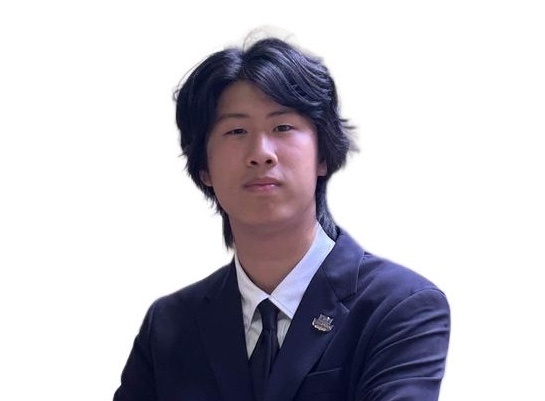
Tom Cai
At just 20 years old, Tom Cai wants to fix fiscal mismanagement and implement pragmatic policies in Ward 13. A former University-Rosedale resident, he moved to the Bay-Cloverhill neighbourhood four years ago. Cai is currently studying economics and mathematics at the University of Toronto.
Though Cai has found campaigning “kind of set against young people,” he enjoys the process and is adamant about diversifying City Hall, which in his view is currently “somewhat ideological.”
“You can’t expect change by simply voting for different people. You need to vote on different ideas,” Cai said.
Before constructing more housing, Toronto Centre should rely on the units they already have, Cai said. To solve housing affordability, he believes in a “painful but necessary” vacant home tax hike of 20 per cent to make vacant housing “economically unviable.”
If elected, Cai will only approve new housing developments in which two- or three-bedroom apartments are the majority. “It is physically impossible to raise a family in a studio apartment.”
His campaign calls for slashing the city’s private security contracts paid to clearing homeless encampment sites. These funds should be rechanneled to non-government agencies – relieving primary response unit officers from social care duties – and new safe injection sites and shelters.
“It is fully reasonable that we fund these shelters to have rehab doctors on site,” Cai said. “It’s a policy that could have been done if we spent more time actually doing policies instead of just looking for blame.”
Cai wants police officers to get more involved in the communities they patrol. Community police would conduct regular wellness checks on residents and become familiar faces in the area, improving productivity and accountability, Cai said.
“I have very clear-cut policies,” Cai said. “I promise I’ll accomplish all of it to the fullest extent. You can hold me accountable to it.”

Victoria Davis
Drawing on her education, lived experience, and childhood belief in helping others, Victoria Davis seeks to support vulnerable populations and reframe the conversation around them as she vies to be Toronto Centre’s next councillor.
As a community worker and student of disability studies at Toronto Metropolitan University, Davis, who goes by she/they pronouns, sees supporting the unhoused as the most pressing issue, requiring accessibility and accommodation.
“When we prepare the city for our vulnerable people, we prepare it for everyone,” she told the bridge. “It’s little things that will really transform and make the city accessible to everyone and allow them to feel like they are included in their community.”
Davis believes the city needs to support unhoused persons in new ways to ensure their safety and survival. The current housing system, she argues, doesn’t offer enough indoor spaces or protections for unhoused people, moving them from encampments to shelters and back on the street again. The province’s closure of consumption sites, and online misinformation campaigns, have contributed to the problem.
“As a frontline worker, I’m hearing these stories and seeing the consequences of these actions,” she said. Accommodating basic humans needs can avoid further dehumanizing and shaming of unhoused persons.
“We need more washrooms,” she said. “People who are unhoused are excluded from places that have washrooms; they are getting kicked out of malls. That’s not okay, and that’s not safe.”
Davis, who is from Okinawa, Japan, says her approach to helping the most vulnerable starts with keeping people safe and housed.
“We need to walk alongside people who are struggling and suffering. I have been through a massive healing journey, and I know how incredibly hard and complicated that journey is. And I know how desperate and hard it is when you don’t have a stable home.”
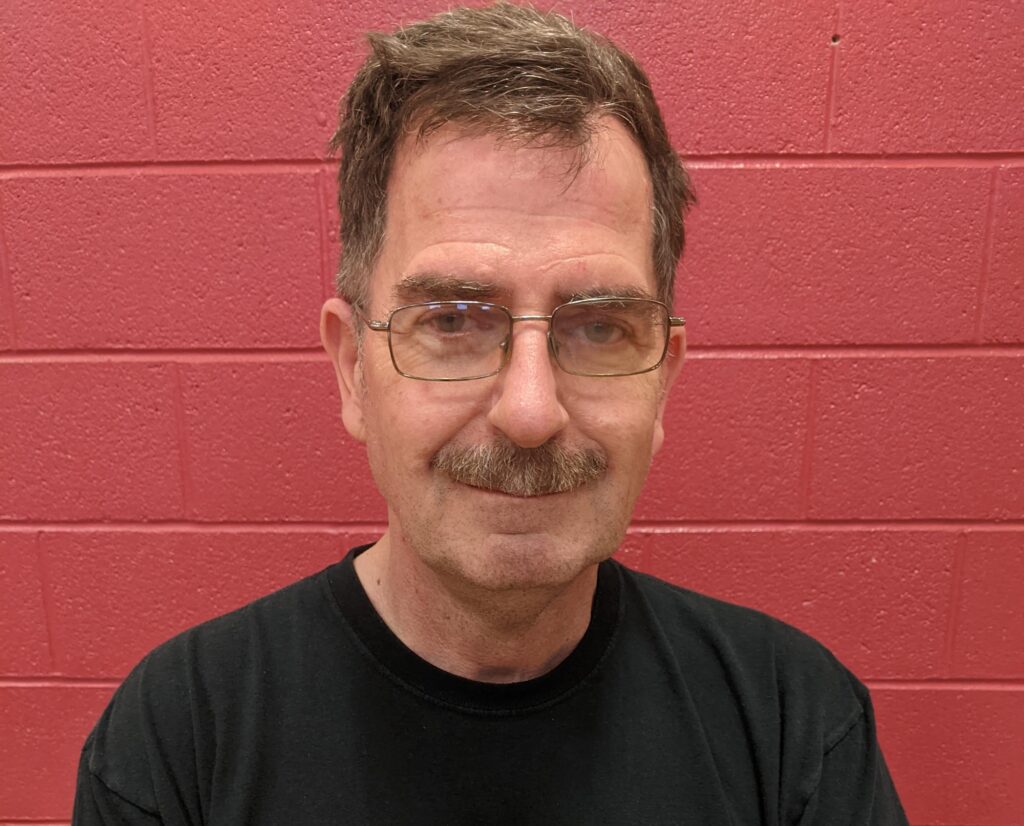
Morgan Harris
Having worked as a consultant to Bay Street corporations as well as serving on boards for Toronto food banks and housing initiatives, Morgan Harris is looking to leverage his skills to serve Toronto Centre Ward 13 residents.
Harris is a director at Habitat Services and the executive director of the Allan Gardens Food Bank, having worked at the Daily Bread Food Bank. He has also served as director of Winchester Park Residents Association.
Harris has seen firsthand a significant increase in demand at food banks and in housing waitlists in the last five years. “Housing and food security are significant concerns, ” he told the bridge.
“There are thousands and thousands of people volunteering, and corporations donating food and money, to make up for the fact that the government does not want to provide income security, leaving it to ordinary citizens, civil groups, and private donors to make up the difference,” he said.
“It seems to be inequitable and unjust.”
He noted that while people support housing initiatives in theory, many residents don’t want subsidized housing in their neighbourhood, which creates tension and roadblocks.
“We need to house people appropriately and give them the support they need,” he said. “I know what city-run housing looks like: those people have minimal support, they’re falling back into their [previous] lives. We should look for alternatives.”
He believes the city needs to be more creative and aggressive concerning housing. Harris points to the HousingTO 2020–2030 Action Plan that identified city-owned property available for public housing – but has not resulted in substantive action.
“The city is kind of failing with the housing portfolio,” he said. Harris wants to look at the private sector, community land trusts, and specific city agencies that may be better equipped to manage housing.
Fixing the housing crisis could also alleviate pressures on the shelter and healthcare system.
“The city has to make an effort to find housing for whoever needs it,” he said.” We have to find appropriate housing for people’s needs to lessen ER visits and hospital admissions. Housing is a part of long-term health.”

Walied Khogali Ali
Living in Regent Park since 2005, Walied Khogali Ali tells the bridge, “I have seen both the beauty and the pain of our communities up close.”
A first- generation immigrant who came to Canada in 2002, Ali has since been involved in community advocacy in Toronto. He is co-chair of the Regent Park Social Development Plan and co-founded TTCriders, a transit advocacy organization. He has previously led the Toronto Environmental Alliance, and co-founded the Coalition Against White Supremacy and Islamophobia.
Ali says the heart of his campaign is human rights, the belief that “our communities deserve respect – meaning affordable housing, responsible investment, safe streets, good jobs, food security, access to space, and leadership that shows up before, during and after a crisis.”
Housing is a central focus of his campaign. Ali says he has championed for residents throughout the last two phases of the Regent Park revitalization, a 20-year initiative to transform the area into a mixed income, mixed-use community.
He points to displacement during revitalization “because of the erasure of the existing developments. The commitment made was no displacement for my community. There’s a right to return.”
He says he wants to end the practice of selling off public housing assets to the private sector, and to enact a city-wide no-evictions policy and a rent-to-own program.
“We need investment in youth employment, food security, community safety, access to space, and strong social development plans that empower residents and local leaders.”
Youth opportunities and safety are also priorities. In 2023, Regent Park recorded no gun related deaths – a milestone achievement Ali is proud to have been part of. “2026 is hoping to be another year of no gun-related deaths. And we’re hoping through social development plans that it’ll be years to come.”
Ali wants greater resident involvement in municipal decisions. “If you’re not at the table, you’re on the menu. Life is short, we need to work collaboratively.”
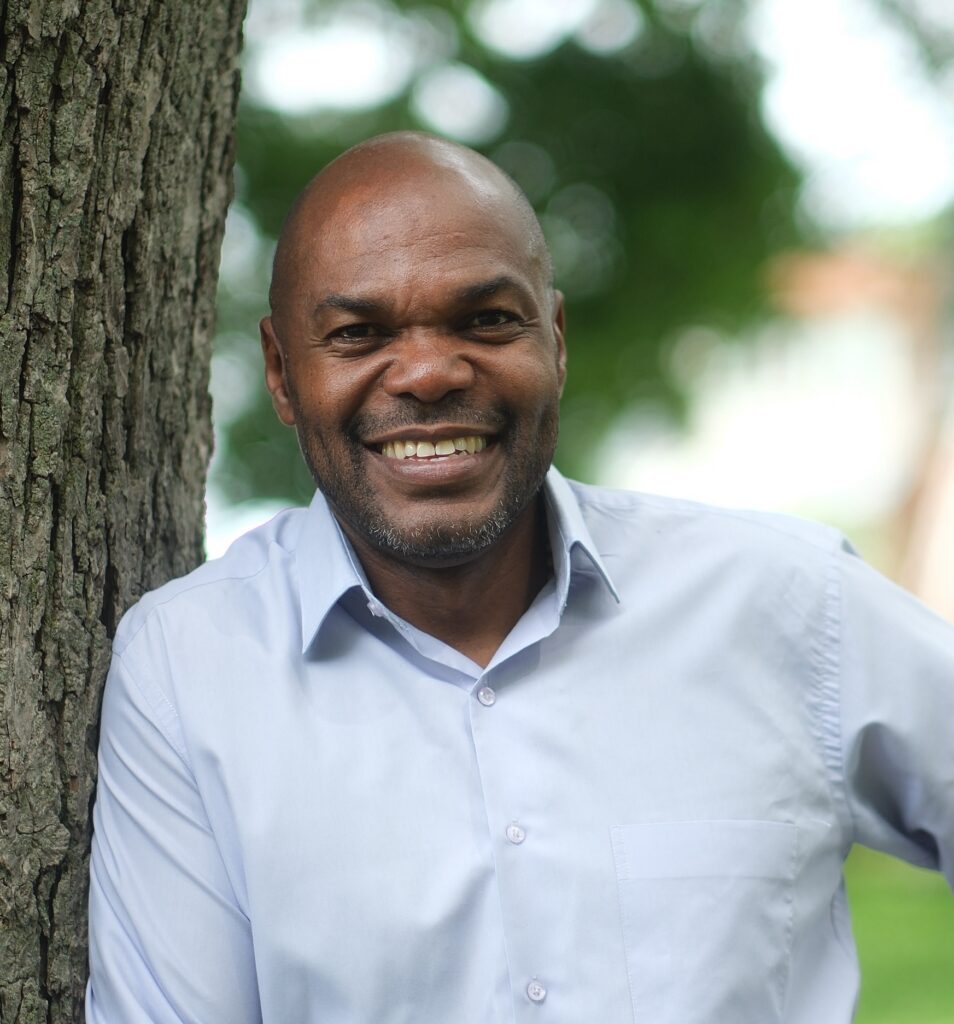
Chris Moise
After four years as Ward 13 Toronto Centre city councillor and six years before that as school board trustee, Chris Moise is seeking re-election, “to give back to our community,” he told the bridge.
Moise has worked as a civil servant throughout his career, including as a police officer and addictions counsellor. He has served on several boards and committees, including as chair of the board of health, on the 2SLGBTQ+ community advisory committee and the budget committee. He says the responsibilities assigned to him by Mayor Olivia Chow and previous mayor John Tory reflect his experience and capabilities.
Moise identifies community engagement, public health and safety, and housing as top priorities. “In the last four years I’ve had 18 town halls, more than any other councillor,” he said.
He takes pride in helping establish the downtown community outreach response engagement (CORE) team, which assists vulnerable residents before they get into crisis. “We have eight teams, each consisting of one nurse and two officers providing health care and referrals to housing. The program has engaged with around 5000 individuals and was renewed and for another 18 months.”
Moise advocates for harm reduction, including providing clean needles and condoms. He also authorized Toronto Public Health to challenge the province’s Safe Consumption Site closures in court.
“We have a toxicity epidemic and since the closures people are struggling,” he said, citing increases in overdoses and emergency room visits.
“With the encampment protocol that I helped create, we have no encampments in our parks in Toronto Centre.” The protocol gives encampment occupants referrals to housing and 72 hours notice before removing them.
“I’ve secured funding to have all parks in Toronto Centre cleaned every day.”
Moise says he helped secure funding for upcoming projects including the revitalisation of George Street, new affordable housing, renovations to John Innis Community Centre, Allan Gardens, Moss Park Arena and St. Lawrence Centre for the Arts and expansion of bike lanes.
Moise values shopping local. “When I pedestrianized Market Street and Church Street we had an increase in sales for small businesses.” He says he’d like to see both streets permanently pedestrianized.

Curran Stikuts
Born and raised in downtown Toronto with over 15 years serving Toronto Centre residents, Curran Stikuts believes his firsthand knowledge of the residents and their pressing concerns will see him elected as the Ward’s new councillor.
“There’s a ton of issues across Toronto Centre, from affordability to how we take care of public spaces to the mental health and drug crisis that plays around the street and our doorsteps,” he told the bridge. “What I also see across neighbourhoods is people who care so much about where they live.”
Stikuts spent 10 years at The 519 Community Centre in multiple roles working with youth, seniors, and recreational and educational programs before becoming director of advocacy and strategic communications.
“That combination of grassroots work embedded within our community and the daily realities of struggles paired with sitting at the decision-making table has prepared me for understanding the issues of local residents and doing the job from Day One.”
Stikuts has been endorsed by New Democrat MPP Kristyn Wong-Tam, as well as the support from the Toronto & East York Labour Council.
Solving public safety and well-being problems requires finding supporting programs and housing for those in need so that people feel comfortable walking in their neighbourhoods, Stikuts says. This means providing appropriate housing and supporting individual needs while reducing the action by law enforcement against those who need help.
“There is not a world in which we can arrest our way out of a mental health and drug crisis,” he said. “That is the most expensive and least efficient way to deal with the problem, and one that doesn’t show results.”
Stikuts does want to increase bylaw enforcement to keep neighbourhoods safe and comfortable while supporting renters by making sure landlords adhere to their obligations. As a renter, Stikuts is sympathetic to the uncertainty of living under a landlord, especially as someone living in a building he said is slated for demo-viction.
“It’s an issue close to my heart,” he said. “We need to both build new housing so there’s more opportunity and at the same time ensure we have, appropriate level of protection for folks who are renting.”
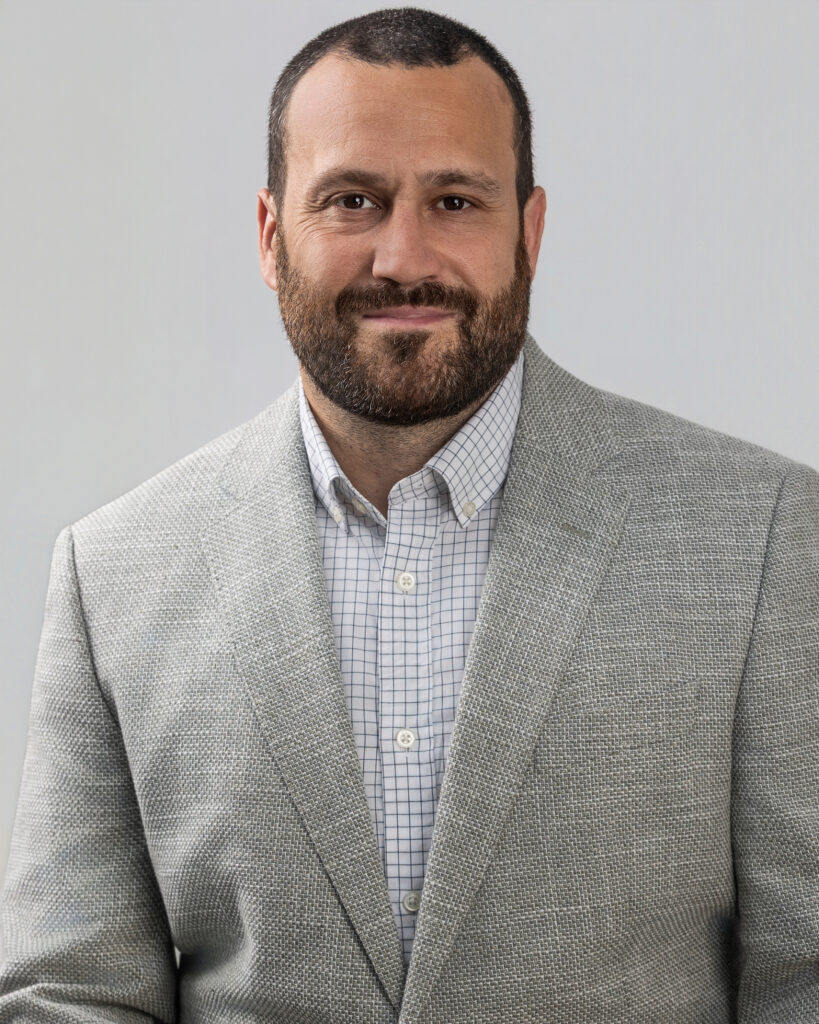
Daniel Tate
Lifelong Torontonian Daniel Tate, founder of the non-partisan online advocacy group IntegrityTO, is running against incumbent Toronto Centre city councillor Chris Moise. Tate previously filed a code of conduct complaint against Moise following an encounter related to the renaming of Dundas Square to Sankofa Square.
“The incumbent has made some false and hurtful comments about me in the past. I encourage people to make up their own mind based on my actions, and the policy proposals I suggest.”
Tate holds an honours degree in Political Science and Urban Studies from York University and wrote his thesis focusing on Yonge-Dundas Square. A published author, Tate says two decades of private sector experience make him qualified in budgeting, schedule management and quality control.
The group has attracted tens of thousands of followers, with graphic content of homelessness and public drug use and criticizes elected officials and city policies.
Tate identifies his priorities as affordability, public safety and cleanliness.
“The middle class is being squeezed by record-levels of property taxes, developers are passing excessive charges onto prospective buyers, exacerbating lack of affordability.”
Tate opposes the city supplying harm-reduction supplies and supervised injection sites and supports stronger enforcement and rehabilitation.
“The City distributes millions of drug paraphernalia supplies under the guise of ‘harm reduction’ is hurting communities and making us all feel less safe. It facilitates destructive addiction. I’d like more resources diverted to detox and recovery.”
Tate says, “The lack of public safety on our streets, parks and the transit system is concerning. We must have a zero-tolerance stance towards harassment, crime, drug abuse and trafficking. Stronger enforcement of existing laws, dedicated Toronto police transit patrols, improved fare enforcement on the TTC, and meaningful consequences for vandalism, public defecation and public urination.”
“Voters have a clear alternative to the usual status quo. If you are not happy with the state of the ward, and the city at-large, vote for a new voice.”
Nicki Ward
Striding away from party politics, Nicki Ward describes herself as an authentic and qualified alternative in her second run for City Council in Ward 13. Originally from Britain, she moved to Toronto over three decades ago and has since worked in the finance sector, at The 519 and on projects across all three levels of government.
“It’s a serious job that requires serious qualifications. It’s not just a vibe thing,” she said. Reflecting on her 2022 campaign, where she obtained more than a third of the vote of current Councillor Chris Moise, she says every issue back then is now either the same or worse.
Ward rejects comparing Toronto Centre with North American suburbs. “This is, in many ways, a city in its own right,” she said. In her view, Ward 13 shares the “cosmopolitan issues” found in European cities and should be managed as such with proven solutions.
Familiar with community land trusts – she was CEO of the City Park co-op on Church Street – Ward wants to work with developers with underdeveloped real estate to double the number of co-op housing units in the ward and tackle the lack of affordable housing. “Everybody wins out of this,” she said.
Ward promises to “fully engage” with the provincial and federal governments to secure funding for recovery treatment for residents living with mental health and addiction issues. Her campaign wants to increase the number of paramedics, ambulances and support staff.
Living with a disability, Ward says accessibility is a top priority. Her office wants to hire a part-time “flying squad” of people with mobility issues to navigate the ward and report on blocked sidewalks or broken traffic lights.
If elected, Ward would become Toronto’s first trans councillor. “As an equity-seeking candidate, I’ve never run on that,” she said. “But if you are genuinely progressive, how could you not vote for someone who is good at the job?”