

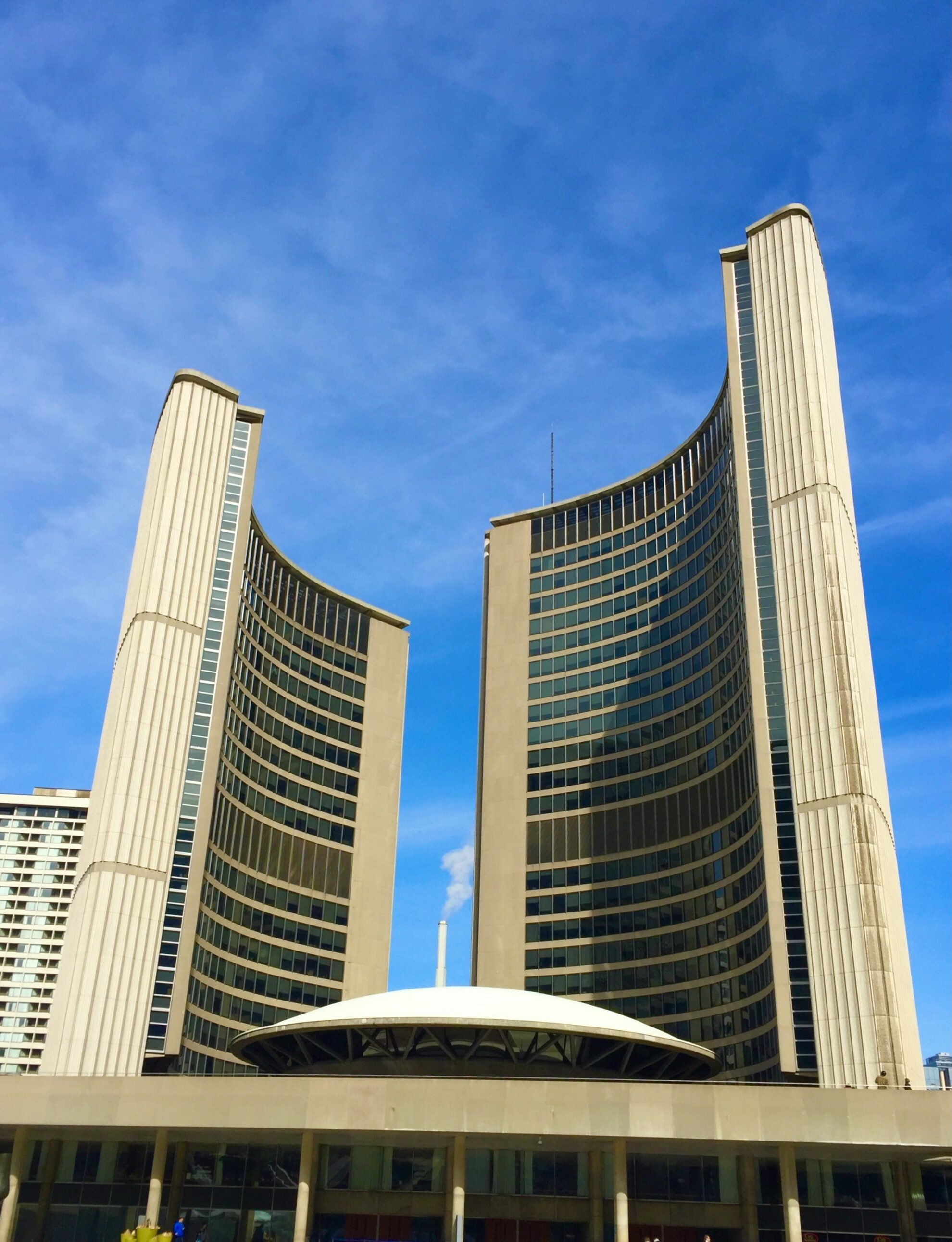
The following are the candidates interviewed by the bridge as part of our effort to help voters learn more about those running in Toronto- Danforth this October. Candidates not included did not respond to multiple attempts to arrange an interview before our print deadline.

Susan Chapelle
After serving two terms in municipal government in Squamish, British Columbia, Susan Chapelle has moved back to her home base in Ward 14 where she “grew up in the art scene” as an audio technician and rigger in IATSE Local 58.
Chapelle is a third-generation municipal worker. Her father is a physicist, her grandfather was a municipal engineer at the City of Toronto, and her grandmother won Toronto volunteer of the year award. “From a very young age I was learning [that] if things get funded, they get done,” she said.
Chapelle comes from a complex educational background of more than ten qualifications, including an executive master of business administration and community economic development certificates. She worked as a healthcare practitioner and chief operating officer of PurMinds NeuroPharma, a neurotherapeutics developer. She is now owner of Chapelle Health at Greenwood and Danforth, working with musicians and women in post-surgical care.
While running for municipal council in Squamish, Chapelle noticed its municipal plan was due for renewal and lacked zoning for local businesses. “That became my major issue,” Chapelle said. “I want complete planning for a community using data-informed decision-making.”
“I see housing and density being planned separately,” Chapelle said. “Having served two terms in municipal government, I know municipalities can plan these things together, and I think Ward 14 needs that practical focus.”
Her campaign promotes housing that contributes to complete communities, she says. “Success is whether the people living in those units (homes) have transit, schools, childcare, health care, parks and jobs.”
Health care also falls under this umbrella. Chapelle describes land-use and health planning as separate systems at different levels of government, where land-use is municipal and clinics fall under zoning. “I don’t think municipalities should approve growth until understanding what growth means for health,” she said. “My experience in Squamish taught me that they need to be connected.”
Chapelle says her campaign takes a non-partisan approach. Partisan municipal politics “doesn’t work when your community itself is non-partisan,” she said. “I’m only interested when an idea works and if it’s good for the community.”

Sara Ehrhardt
Sara Ehrhardt became involved in politics nine years ago while studying at university, when she worked with Engineers Without Borders, Maude Barlow and the Council of Canadians to oppose water privatization. In 2017 she fought to save the S.H. Armstrong pool alongside local parents and community members. She was elected as a
Toronto-Danforth public school trustee in 2022 and is now running for City Council.
Erhardt’s platform emphasizes the need to better connect housing infrastructure and growth. Residents “want to ensure that the community services like parks, libraries and recreation programs are growing to accommodate the new housing that we’re getting in the ward,” she said. Focusing on traffic safety and meeting infrastructure demand will be her key priorities, according to Ehrhardt.
Measures to improve traffic safety will include speaking directly with residents street by street to solve concerns near schools and pedestrian crossings. She says she will especially emphasize this approach during the ongoing Ontario Line construction.
Other campaign plans include affordable transit through fare-capping, prioritizing affordable housing, and safety for seniors – particularly during winter – by improving snow clearing and increasing city support for delivery programs. She wants the city to be “more aggressive,” with flooding and stormwater runoff measures through rain gardens and completing upgrades to the sewer system to better preserve the Don River.
Ehrhardt will also prioritize accessibility and communication if elected. As a trustee, she says, she learned the importance of listening to the community. “I’ve seen that many of the best local initiatives in our area have been driven by local residents.”
George Fawcett
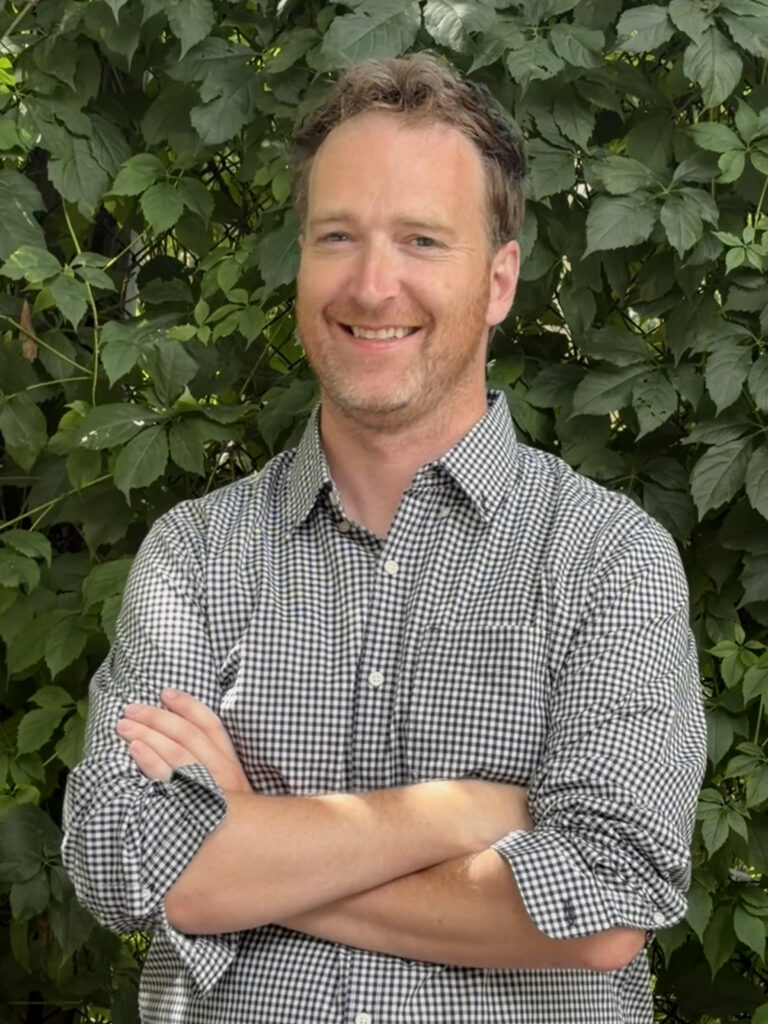
George Fawcett wants to “cut the red tape,” and eliminate small business fees such as those for business signage and for physical displays outside businesses. That’s the first campaign priority for the co-owner of Lou-Lou’s Flower Truck on Munro Street north of Dundas Street.
He wants to help tenants by tackling above-guideline rent increases under Ontario legislation. “I think it’s a completely unfair policy,” he said. “It’s basically making tenants foot the bill for capital improvements that the landlord or developer made.”
Fawcett also wants to expand the city’s RentSafeTO program. If elected he will advocate for more investigations, quicker remediations and larger fines, and using the funds from the fines to expand the program.
Improved community safety in Ward 14 is another priority. He wants to reduce speeding by adding speed bumps, and strengthen reinforcement protocols around schools and daycares.
“We need to reprioritize speed enforcement from being purely a revenue-generating tool to actually being a safety tool.” It should be focused on heavily pedestrianized areas rather than well-known ticketed areas, he said.
To improve community safety, especially for children and seniors, Fawcett wants more crossing guards, more law enforcement and longer traffic lights. In winter, Fawcett says snow is not consistently cleared off city-owned sidewalks. He wants to extend municipal sidewalk-clearing into parks and other larger public areas.
His campaign calls for removal of the strong mayor powers granted by the Ford government. “Municipal politics actually affects people the most directly out of any other level,” Fawcett said. “I really feel strongly that we need to make people feel like the City Council can make a difference.”

Mary Fragedakis
Mary Fragedakis was a two-term Toronto-Danforth city councillor, serving two terms from 2010 to 2018 in what was then Ward 29. Making decisions in council is more than theory, she learned; it’s about practical application of policies and “getting people to work together towards shared community goals.”
Fragedakis says community safety, although important, is “bigger than police programs.” She wants to focus on making residents feel more comfortable in their streets and intersections through better street lighting, well-maintained and clean neighbourhoods, and stronger investments in parks and public spaces. “It’s about building neighbourhoods that are active, connected, and welcoming.”
Fragedakis says she has coped with Ontario Line construction “from both ends” in her previous experience on council. She plans to manage this for Ward 14 through conversations with Metrolinx, contractors and subcontractors, and by supporting small businesses facing setbacks.
“Even if that means window washing from the dust, or working on having signage installed for them, and insisting that Metrolinx get that signage.” This includes signage for business and for traffic, which could also designate commercial loading zones for the businesses, she says.
Fragedakis proposes supporting local businesses with more predictable processes, increased support for local entrepreneurs, greater support for independent businesses and BIAs, and expanding grants for business operations.
If elected, Fragedakis says she will support affordable housing in whichever way it best
supports the people. Whether that is affordable renting housing, development near transit, or better use of underused sites, it all needs to be matched with infrastructure, she says.
“My goal is to manage the ward, and build a more connected community.”
Michael Mitchell
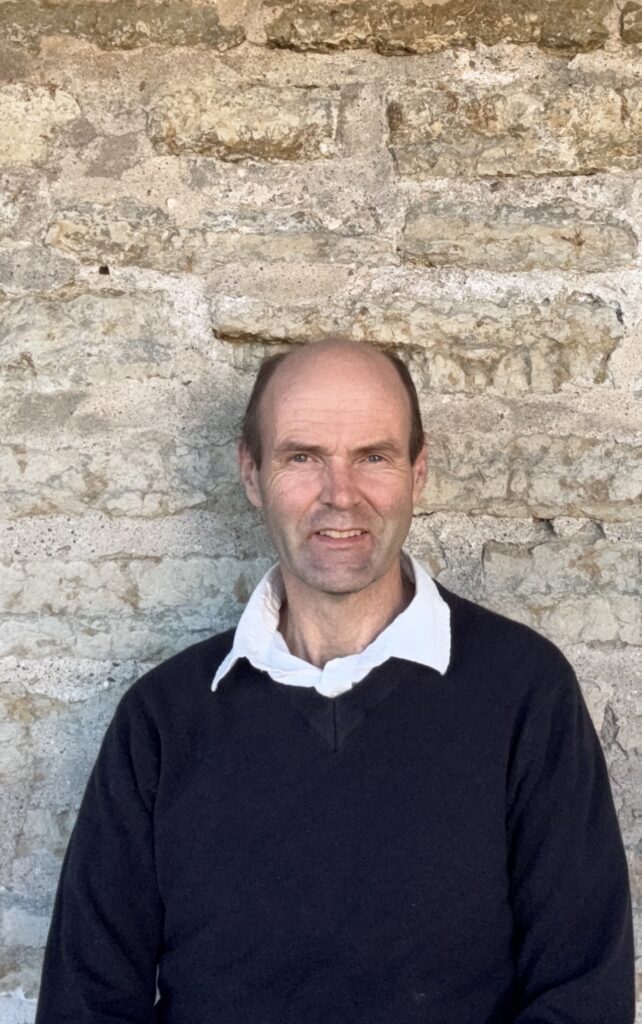
Michael Mitchell studied English and politics, earning masters and law degrees. As a 25-year recovered addict, he says much of his community involvement came “from working with other addicts and volunteering politically.”
One of Mitchell’s key campaign focuses is to improve safety in Ward 14, especially regarding major crimes and drug use. He favours safe injection sites, and hopes they will return as a result of the Charter challenge to the province’s closures. To address vehicle congestion and transportation safety – including cell phone use while operating vehicles, electric vehicles on sidewalks and bike safety – Mitchell proposes hiring more police officers.
Other top priorities for Mitchell are reducing homelessness through affordable housing, addressing the “growing drug problem,” by increasing funding for treatment centres and better youth education, and eliminating hate speech, which Mitchell says he would do through an under-16 social media ban and “more severe penalties for serious hate speech.” He also wants to reduce technology costs by moving the city from Microsoft products to open-source software such as Linux, which he says should “start right away.”
The city needs to do a “much better job” minimizing Ontario Line disruption than it did with the Eglinton LRT, Mitchell said. “Small business owners should be compensated financially for construction disruptions. This should be factored into the cost of (The Ontario Line) construction.”
His solutions also include pedestrian and cyclist bypass routes, improving communication about closures, and dealing with rodents displaced by ground disturbance through pest mitigation.
Mitchell’s vision for the waterfront is “to make it a clean and safe place for Toronto residents, while minimizing environmental impact caused by development,” pointing to the work done at Ookwemin Minising and Biidaasige Park.
If elected, he plans to support active affordable housing initiatives such as increasing the vacant home tax, increasing funding under the MURA program to acquire apartment buildings, implementing “real rent control,” preventing renovictions, and implementing the new regulatory framework for multi-tenant houses.
Caryma Sa’d
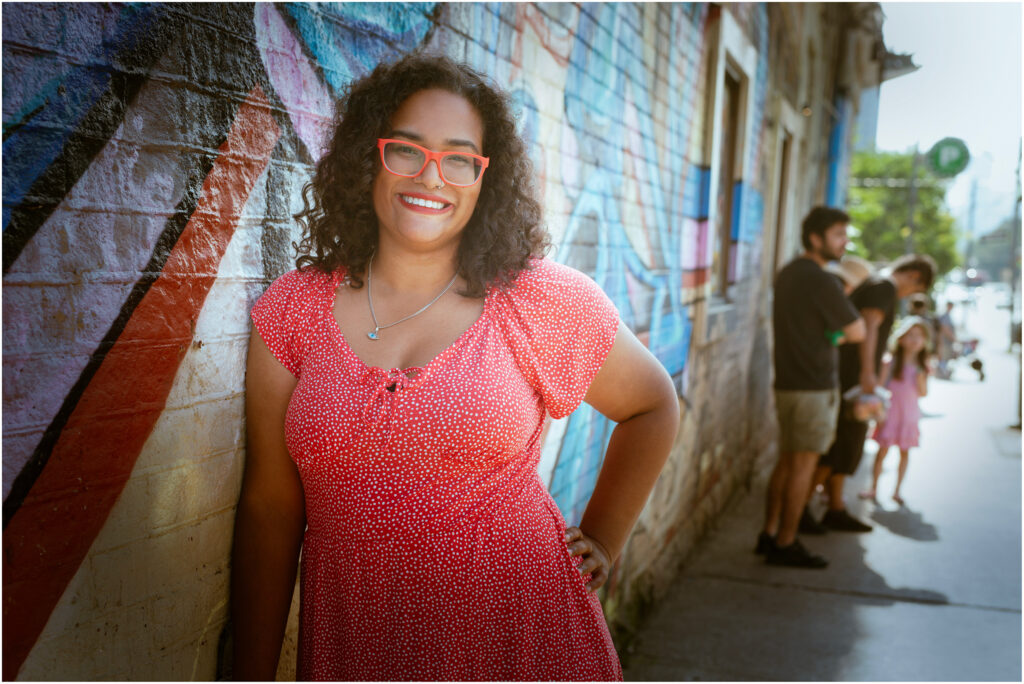
Caryma Sa’d, lawyer and journalist, developed a practice in housing, criminal and cannabis law after training at a Bay Street litigation boutique. She is running for City Council as an independent candidate “not beholden to political parties, activist circles, or ideological camps.”
Sa’d advocates a new approach to harm reduction, mandating in-person, peer-inclusive audits of publicly funded services, investments in withdrawal and treatment supports, and ensuring that everyone has a safe place to go after being discharged.
To make housing affordable, she wants to expand rent banks and establish mediation services to help keep tenants housed, as well as to support small landlords who maintain affordability, require community benefit agreements and affordable housing in major developments, and protect neighbourhoods from speculation-driven displacement.
She wants to improve all modes of transit, including e-bikes, cars and TTC transit. E-bike safety can be improved by speed limits, protective gear requirements, age restrictions and designated riding areas, she said. Sa’d said transit needs a “comprehensive service audit” to identify areas of the TTC that need improving.
For drivers, downtown feels “disconnected” from the East end, and she would work to reduce highway ramp closures, which she says causes a strain on quality of life and local businesses.
Sa’d wants to simplify permitting and licensing in hopes that entrepreneurs can spend less time dealing with paperwork and “navigating bureaucracy.” She wants to prioritize local vendors and workers when awarding major city contracts.
Sa’d also wants to prioritize communication and transparency with the public. “Any waterfront project should require genuine public consultation at the planning stage, not after decisions are made.” This also translates to the Ontario Line, Sa’d saying she would communicate with everyone before any disruptions.
Saying “police should enforce laws consistently,” Sa’d wants to address recurring unlawful behaviour that puts officers and the public at risk and uses a significant amount of city resources. She would seek a seat on the Toronto Police Service Board.
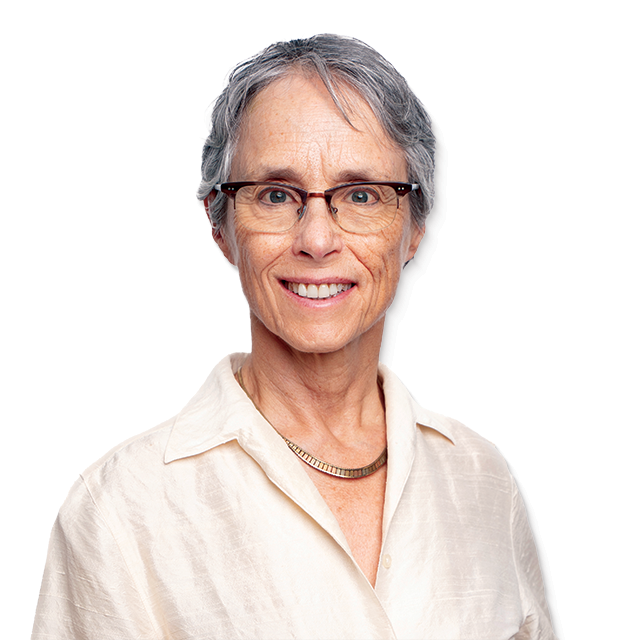
Dianne Saxe
Current Ward 11 City Councillor and former Ontario Environmental Commissioner and holder of two Ph.Ds, Dianne Saxe is running again for city council but has switched to Ward 14.
A large portion of her campaign is environmental sustainability and conservation, which she says can help improve public safety, the Don River, the waterfront, flooding problems and small businesses.
“The waterfront is a hugely important asset” in Ward 14, says Saxe. Now with the mouth of the Don project, which “will be bigger than many Canadian cities,” Saxe sees an opportunity to reimagine community spaces. Access to green spaces and ravines is another part of her environmental focus.
“We need green spaces. We need to protect them and we need to upgrade them,” she says.
Flooding has been apparent in Ward 14 and across Toronto. With experience in stormwater and stormwater management during her time as environmental commissioner, Saxe says stormwater fees for infrastructure that contributes to flooding are essential.
Bike lines, which Saxe says are hugely important, “are key parts of our affordability platform, our climate work, safety, and even supporting local businesses.” According to her experience in Ward 11, small businesses have more success with both foot and bike traffic. Saxe says cyclists are much more likely to stop into small businesses than drivers.
Another big safety focus is speeding and road safety. Saxe wants to narrow road space where it’s not needed, and install more pedestrian crossings, street lights, cameras and speed bumps. “We know that these work,” Saxe says.
On housing, Saxe wants “to do everything possible” to improve affordable living. She worked on two affordable living projects in Ward 11, at 199 and 323 College Street, and plans to do the same in Toronto-Danforth, along with more student housing and rooming houses.

Devyn Stackhouse
Devyn Stackhouse is running for City Council with a platform they call the “Core Four” – four actionable ideas for Ward 14. The rest of Stackhouse’s platform is a “policy corollary.”
The first of Stackhouse’s initiatives is to install shade sails on streets. After their success at the Jack Layton Ferry Terminal, Stackhouse believes shade sails in Ward 14 can improve comfortability. “Extreme health warnings are getting worse,” Stackhouse says. “If we can somehow make them into solar panels to generate electricity, that’s awesome.”
Their next initiative is to implement an “income-proportionate” fine system, which would scale municipal fines according to income using three tiers: full-time minimum wage, living-wage level, and the Ontario Sunshine List. Fines would increase across the tiers; “This creates a spectrum of disincentive,” Stackhouse said.
Freedom From Harm (FFH) is Stackhouse’s third core policy if elected as city councillor. The FFH municipal infraction would make violence against animals a municipal offence. This would lower the burden of proof to a balance of probabilities rather than beyond a reasonable doubt, leading to a larger deterrent, Stackhouse says. “There has been some very concerning animal torture in the ward and that’s not a city I want to live in.”
Enforcing that “people have rights, and buildings do not,” Stackhouse’s fourth initiative is to require that all newly designated heritage buildings be AODA compliant with the Accessibility for Ontarians with Disabilities Act (AODA). “Applications are done through prescriptions, and if it’s screwed up, they will get fined a lot, rather than going through a committee and asking for permission.” Stackhouse wants the process to take less administration time, leading to faster housing builds and saving the city money.
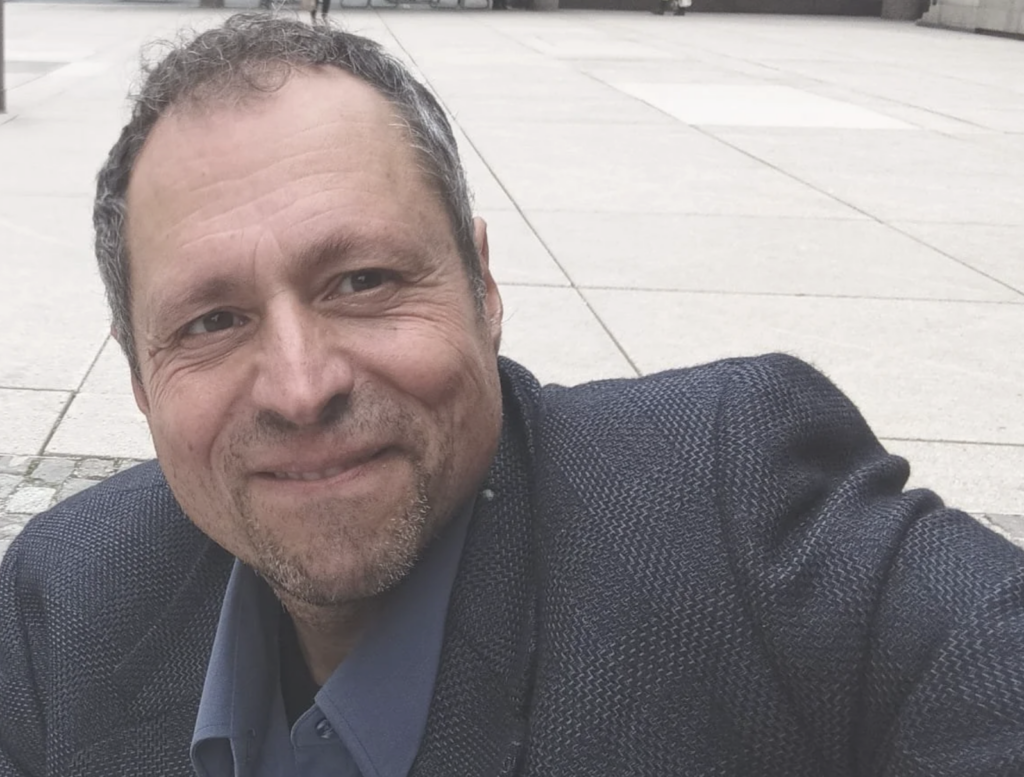
Jason Stevens
Former business owner and McMaster University Student Union President Jason Stevens wants the voices and businesses of Ward 14 to be heard and cared for.
“One of the repeated concerns from residents is they don’t get a reply from the current councillor, and I would make a consistent effort to be available, perhaps a meet for coffee Fridays or such engagements,” Stevens said.
Stevens also wants to attract investment to the Danforth Business Improvement Area by “publishing a business directory with personal stories and distributing it to Greektown and all over North America.”
A vegan, Stevens owned Jays Gourmet Vegan Catering from 2000–2004, with a local customer base including former NDP leader Jack Layton, Stevens said.
“I want to keep bike lanes, increase plant-based initiatives and encourage the TDSB schools to be more plant-based,” he said. “I will boost continued city support for protection of green spaces.”
If elected, Stevens proposes to “save $2.2 billion” by challenging Premier Doug Ford’s Rebuilding Ontario Place Act, also known as the Therme Spa deal. Stevens said he attended a court hearing alongside other citizens challenging the provincial government’s plans for the Therme spa at Ontario Place.
He says he was also in attendance of the recent NoJetsTO protest this summer, and plans to save “billions more” by opposing and eventually stopping the Billy Bishop Airport expansion.
“Stopping the premier from bankrupting Ontario is what [City] Council is trying to do now when not distracted by FIFA or other matters. Let’s save the burden on taxpayers and pressure on municipalities to cut programs,” Stevens said.
Stevens ultimately decided to run for council to help “heal” businesses in a post-Covid world, a task he believes incumbent councillor Paula Fletcher has not succeeded in doing.
“I love Toronto, and want to see great social and economic justice achievements,” he said.

Christiane Tetreault
Saying her involvement in community and local business advocacy happened organically, Christiane Tetreault has a passion for “building relationships, connecting people, and helping businesses grow.”
With a background in marketing and administration, Tetreault opened her business in 2014, served on the executive of the Leslieville Business Improvement Area and has been its chair since 2019. Since then, she has been advocating for small businesses and addressing safety concerns in Ward 14.
Tetreault’s safety plans include expanding the Toronto Community Crisis Services and neighbourhood community officer program, improving street lighting by working towards developer lighting mandates, and an audit crime map to deploy lights in unsafe dark zones.
Another large focus for her campaign is minimizing traffic congestion and improving TTC reliability, especially amidst Ontario Line construction. She said she would push for immediate traffic-management and transit-priority measures, clearer communication around disruptions and detours, a Ward 14 construction liaison, and stronger coordination among the TTC, city and Metrolinx. She will also advocate for minimized bridge closures, reduced noise and disruption, and providing stronger support for local businesses affected by construction.
Beyond the Ontario Line, she would prioritize a safe and easily accessible TTC through clear signage, real-time information, and reliable connections between buses, streetcars, subways and GO Transit.
Tetreault said she wants more affordable housing built in Ward 14. She would review approved and proposed developments for affordable and mixed-income housing opportunities

Maria Voutsinas
Maria Voutsinas “got the bug” for municipal politics while interning for Jack Layton, who at the time was councillor in St. James Town. She was studying political science at Glendon College, the bilingual campus of York University, and later led a St. James Town safety audit with Toronto Police community liaisons, Toronto Community Housing Corp. security services and tenant representatives to create a hub for residents to speak their concerns and improve safety.
Now living in the Danforth, Voutsinas plans to mirror that initiative for Ward 14. She wants to have a “strong presence,” hosting a physical place where residents can raise issues. “Whether I know the answer to a question or not, you will hear from me within the hour.”
Protecting local businesses and residents from Metrolinx’s Ontario Line construction is another priority for her campaign. Voutsinas wants to work with the province to show both residents and visitors that local businesses are open during construction. To prioritize resident safety, she wants more crossing guards, especially near schools.
Another local business initiative is a newly launched Danforth Greektown Renewal Community, of which she is a founding member. The group includes the Greektown Business Improvement Area and local residents, who come together to support local businesses to “thrive and survive.”
Again emphasizing collaborative work with the province, Voutsinas wants to fight to keep bike lanes, protect vulnerable road users, improve green spaces and parks for seniors, and provide affordable rent and housing. “I’ve been that logical voice before, and I think I can bring that to the community to protect tenant rights.”
Voutsinas is the executive director of the National Ethnic Press and Media Council of Canada, and wants to further advocate for “diverse voices and voices who may not know how to navigate certain systems.” Voutsinas says “I want to move that fresh perspective and knowledge over to my neighbours.”

Denise Walcott
A long-time volunteer who serves on two condominium boards, one as president and one as secretary, Denise Walcott learned to manage finances, review budgets and work with residents. “These roles have given me hands-on experience with governance, accountability and the difficult decisions involved in serving a community fairly,” she said.
Walcott grew up in what is now Ward 14 (Toronto-Danforth), where her parents ran a business for 30 years and she later opened a health and wellness business on the Danforth called Notre Haven, offering juices, salads, and fitness classes. “That history has given me a personal understanding of the ward, its changes, and the important role local businesses play in building strong communities.”
Walcott studied Business Administration and Marketing at Centennial College and Toronto Metropolitan University (formerly Ryerson). As a member of Centennial’s student government, she reviewed budgets and helped determine how resources could best respond to their needs.
If elected, Walcott plans to help businesses in the ward through a “business navigator,” a hub for accessing grants, financing, permits, city programs and training opportunities.
Her plans for housing include testing a Toronto–Danforth Attainable Ownership Pilot, which
“would build on Toronto’s current affordable-homeownership partnerships with nonprofit housing providers and examine elements of Whistler’s resident-housing model,” a form of housing that prioritizes residents and workers over tourist accommodations. While also planning to “push city staff to complete the current review of Toronto’s first-time-homebuyer rebate.”
Road and community safety plans include improving crossroads, increasing lighting, reducing speeding, improving streetcar stop safety and using city, TTC and police data to address recurring problems.
Flood protection is another priority. Three city basement-flooding study areas cover parts of Ward 14, and Walcott says she will promote projects currently in the planning and construction stages.
“I believe my professional, financial and governance experience has prepared me to represent this community effectively at City Hall.”