
Paul Farrelly, Op-Ed –
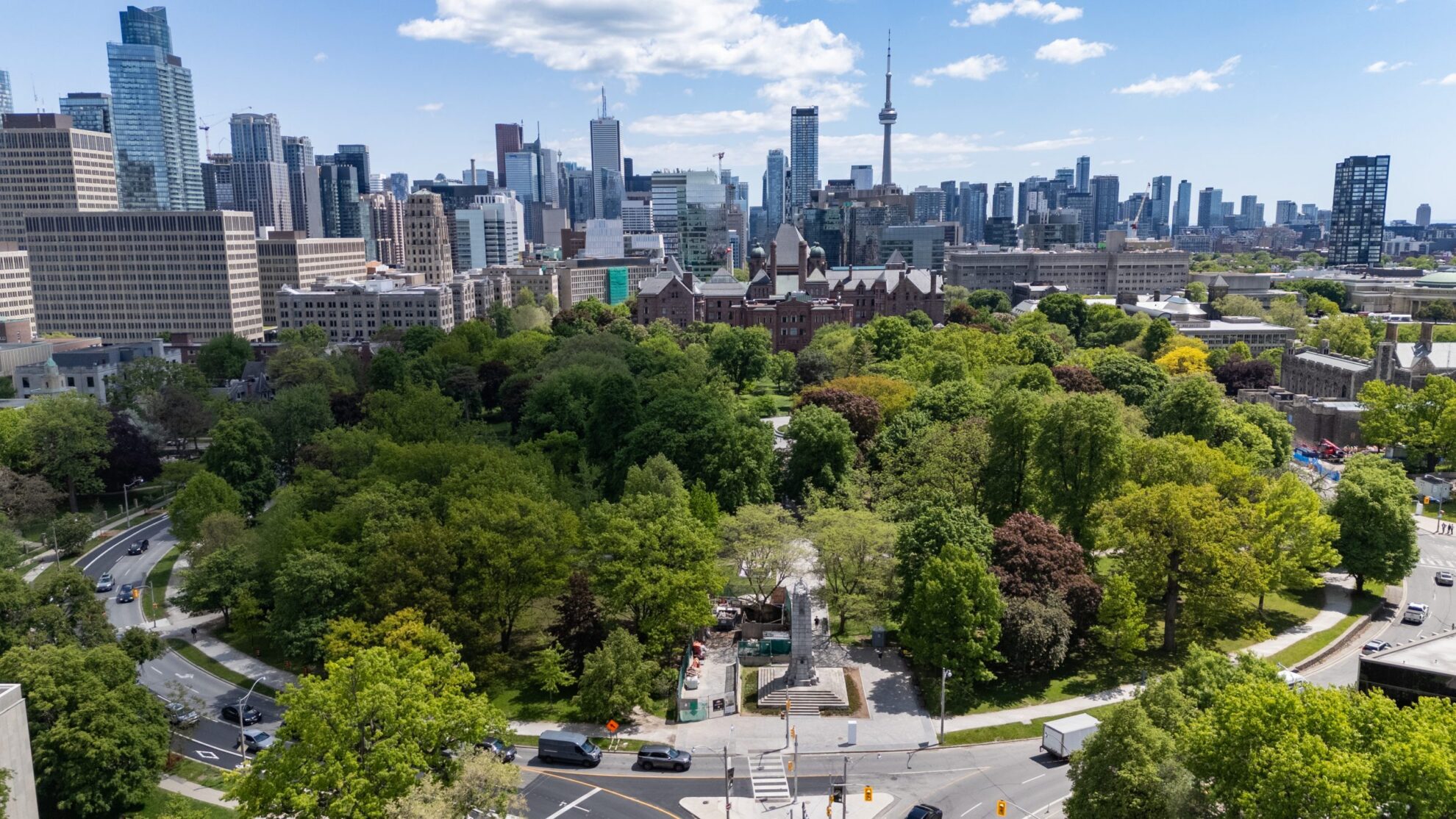
The Queen’s Park North Revitalization Project is a landmark philanthropic and municipal partnership to restore and enhance Canada’s oldest municipal park. Established in 1860, the five-hectare downtown Toronto park serves as an ecological oasis, a historical civic common and a space of expression and assembly, particularly for Indigenous and 2SLGBTQ+ communities.
The Weston Foundation has committed up to $50 million to fully fund the revitalization’s capital design, community engagement and construction. The foundation is also providing approximately $2.15 million annually for 20 years to the University of Toronto to cover enhanced operations and dedicated programming. Donor funds are expected to enable the City of Toronto’s operating costs to remain consistent with current levels.
Following three public engagement phases and technical studies, the park’s conceptual plan was substantially revised in June and passed at City Council to prioritize ecological health and heritage conservation:
● Tree protection: Guided by a new urban forest management plan, all 358 existing trees (including 88 “distinctive trees”) were mapped into impact zones of red (critical root zones where impacts are unacceptable), yellow and green to guide design and construction.
● The Learning Forest: Proposed for the western quadrant, this feature has been scaled back to feature a shorter, lower elevated walkway (up to 150 metres long and three metres high) utilizing existing hardscape to prevent root zone soil compaction.
● Central building and café: The planned central structure’s footprint was reduced by separating the public washrooms (maximum 500 square feet) from the café (up to 2,700 square feet) to protect mature trees. The modest, year-round café will benefit from integration with the University of Toronto’s student meal programs.
● Lawn restoration: Responding to community concern that previous designs overbuilt the landscape, the open lawn area was restored to 41 per cent of the park (up from 25 per cent).
● Built reductions: The “Workshop,” originally proposed for standalone programming, was entirely removed to minimize physical structures in the park.
● Cultural and Indigenous heritage: The plan integrates a draft statement preserving the park’s pathways, lawn and tree canopy. It explicitly commits to embedding Indigenous cultural values, history, and placekeeping, advancing collaborative scopes of work with the Mississaugas of the Credit, Six Nations of the Grand River, and the Wendat Nation.
A tri-party governance model will oversee the park long term:
● Steering committee: Composed of one representative each from the City, U of T, and the donor.
● Executive director/project manager: David Stonehouse, formerly 12 years as City Planning’s director of the Waterfront Secretariat, has been appointed to manage day-to-day operations and coordinate programming.
● Advisory body: A 20-member consultative group of local stakeholders, nearby cultural institutions (including the Royal Ontario and Gardiner museums) and public appointees, co-chaired by the ward councillor and the executive director.
● Design working group: Before the formal advisory body is established, an interim working group of up to 10 members will consult on final design details.
Construction will proceed in two major phases to maintain pedestrian access and protect the urban forest:
● Phase 1 (late 2026–2027): Landscape improvements, pathway upgrades, lighting and arboricultural work in the northern portion of the park.
● Phase 2: Construction of the café and washrooms, commemorative garden, Learning Forest and water features.
The project team is directed to report to the city’s Infrastructure and Environment Committee in early 2027, followed by a report in 2028 and biennial reports thereafter.
Friends of Queen’s Park North: A volunteer collective from seven adjacent resident associations was created and incorporated: ABC (Yorkville and north), Annex, Bay Cloverhill, Church Wellesley, Grange, Greater Yorkville and Harbord Village. The Friends (http://bit.ly/FoQPN) engaged with the project team on heritage, forestry and governance.
Paul Farrelly is the Church Wellesley representative on Friends of Queen’s Park North