
Rodrigo Huerta Aguirre –
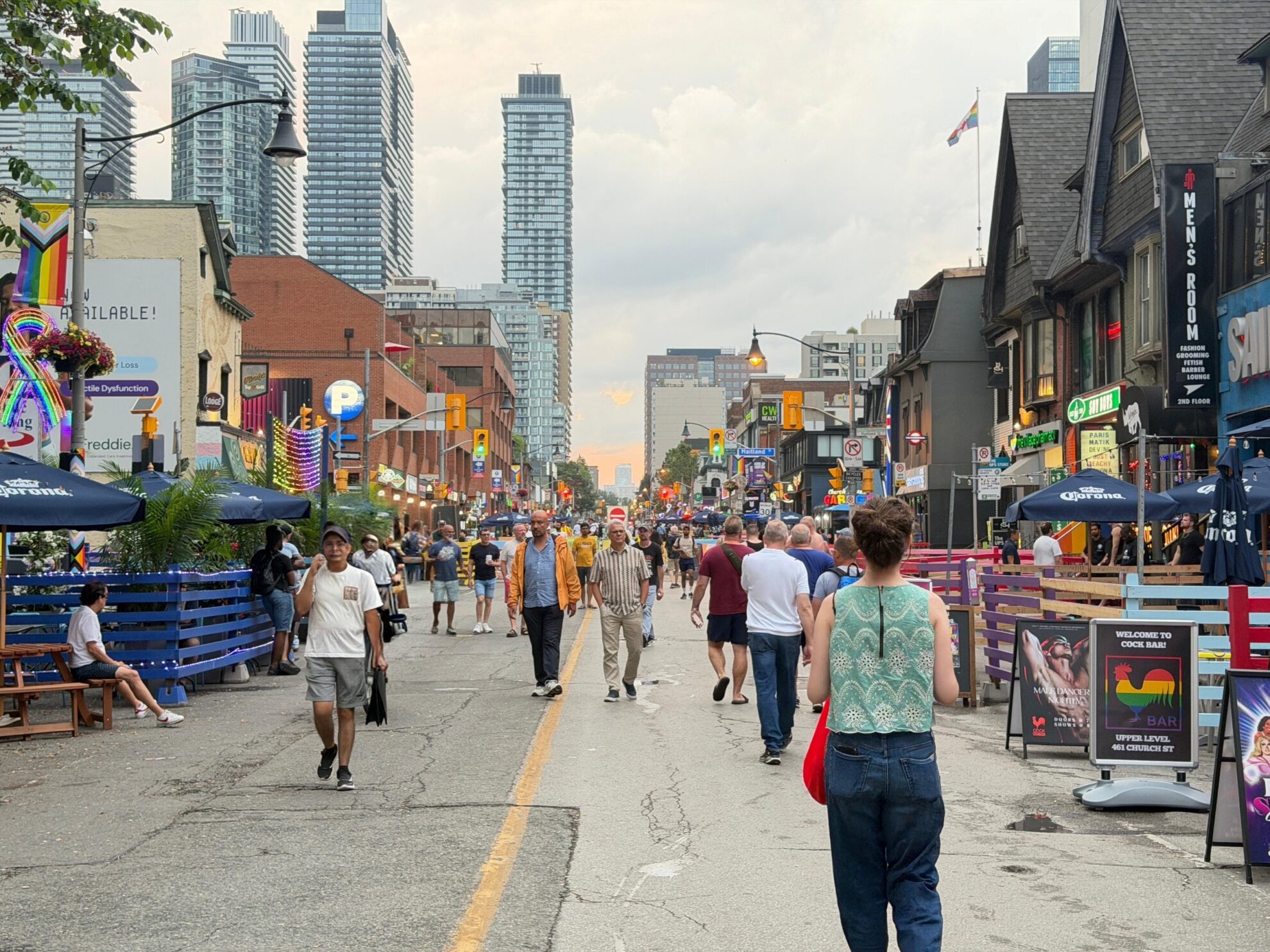
After great success this summer, the pilot project that pedestrianized two blocks of Church Street should be back bigger and better next year, businesses and attendees say. From June 19 until August 21, the Gay Village kept cars off the street between Wellesley Street East and Alexander Street.
Foot traffic usually decreases during the summer, but pedestrianization revived it, George Pratt, owner of the Flash on Church club and chair of the Church-Wellesley BIA, told the bridge.
“What it did for the community is amazing,” he said. “It brought the village back to life.”
The arterial road popular with bar and restaurant-goers is pedestrianized during the late June Pride festival and parade every year, followed by quieter months until Halloween, business managers in the area say. With a surge in measured foot traffic to 500 per cent, Jimmy Georgoulis, the manager of O’Grady’s on Church, told the bridge that the pub hadn’t seen that level of engagement in two decades.
“This was one of the most positive summers our neighbourhood has experienced in many years,” Georgoulis added. “We would love to see the pedestrianization project return for a much longer period each summer.”
Pratt agrees and says the Church-Wellesley BIA is listening to the feedback of residents and businesses to make the project permanent, hypothetically from May to October. “People are already [asking], ‘Why did it close so soon? Why couldn’t it be longer? Why can’t we have this all the time?”
“It’ll be back. I’m sure it will be,” Pratt said, believing a lengthier project will provide a better chance for businesses to invest in the project.
Less than a week after the street closed to car traffic, Toronto Centre Councillor Chris Moise told reporters that the project’s initial budget of $150,000 – mostly covered by the local business improvement association – was compromised after the Toronto Police Service insisted on deploying six officers 24 hours a day for the duration of the project – at a price tag of $3 million. The BIA and city councillor were able to negotiate down the cost to $250,000 in private security and $50,000 in police patrolling on the first two weekends of the project.
This model would make future pedestrianization efforts not “feasible nor sustainable” Moise’s office told the bridge in an email statement.
For the councillor, the biggest obstacle was the nature of the permit for the project. With pedestrianization categorized as a street event, local businesses and Moise’s office had to take on the site’s logistics including security and waste management, which are manageable for a week but complicated in a project lasting two months.
“Moving forward, the city needs to step up as an active partner, create a viable program, and take on standard municipal work, […] as they regularly do on city streets,” Moise’s staff said.
For this, Moise and Toronto-St. Paul Councillor Josh Matlow advanced a motion at City council in June to study an improved framework to handle pedestrianization projects.
Despite the setbacks, Pratt says he is happy with the work of the city and local councillor. “They always say, ‘In City Hall, nothing ever gets done,’ but they were able to move things along to get the permits in place, with financing. They were quite amazing.”
The Church Street pilot was designed by planning student and local advocate Rodney Chan, who told the bridge the decision to extend the project ultimately comes down to the city planners.
“We live in a city that is still very car-centric and resistant to change. This pilot in itself has been tough to pass, but I’m glad we were able to and show that [pedestrianization] works,” Chan said. “Hopefully we can do more in the coming years on Church Street but also across the city.”
If pedestrianization returns, the BIA seeks major security and accessibility improvements such as more seating and even retractable bollards. “We would appreciate continued early communication so businesses have more time to prepare, plan special events and install activations,” Georgoulis said.
A public survey distributed by Moise’s office asking village residents and visitors for feedback about safety, traffic, and noise levels in pedestrian streets is open until September 7.