
Anthony Marcusa –
With essential construction underneath Yonge Street looming, the city is considering dramatic changes in the city’s traditional main street.
The city-led project known as yongeTOmorrow is looking to use planned watermain replacement as an opportunity to change the makeup of Yonge from Queen Street north to College Street. Current design proposals envision a wider pedestrian space complete with trees and art while reducing access for cars and lowering the speed limit.
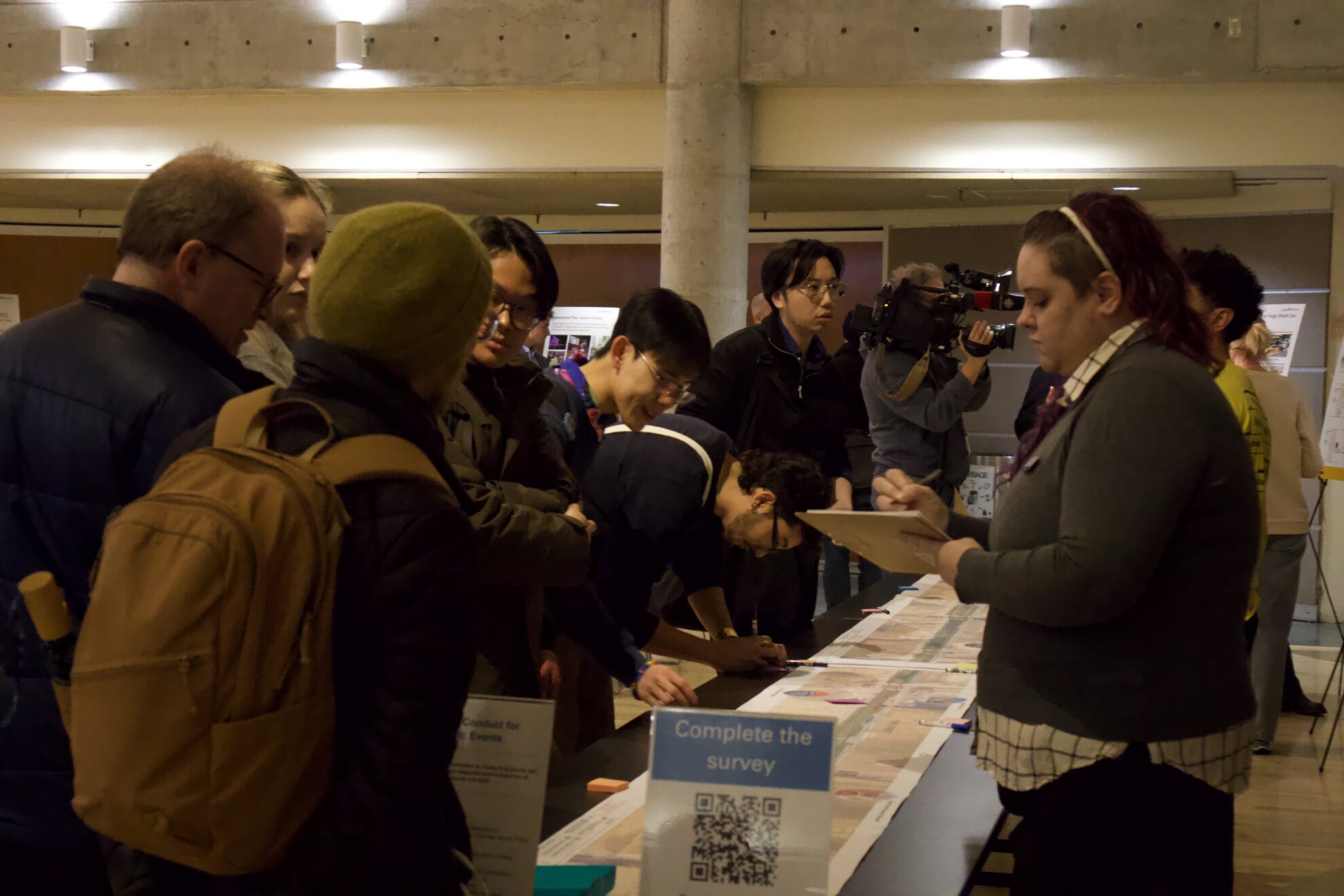
Various attempts have been made to revitalize Yonge Street for decades, the most recent starting in earnest in 2019 with an environmental assessment. Years of public consultations and surveys followed, with findings and a design proposal being presented at a public drop-in event on April 21.
According to the project, Torontonians are interested in a Yonge Street that is more accessible and safer, with more public and green space. They want to improve the streetscape, support local business and ensure sustainability. There should be spaces for entertainment, conversation and dining, and easy access to the area via transit.
“If you’re going to rip up Yonge Street, let’s put it back better than it was,” Pauline Larsen, executive director of the Downtown Yonge Business Improvement Area, told the bridge. ” How will the public realms function and who is going to ensure they will be well maintained?”
“It is foundational that our beautiful new street stays beautiful, and makes everyone feel welcome.”
The proposed design would increase pedestrian space, and add a clearway about four metres wide and a furnishing zone nearly three metres wide on both sides of the street The furnishing zone would include trees, plants and furniture as well as waiting zones for food couriers and delivery drivers. Wayfinding, public art and Indigenous place keeping will also be incorporated.
Car traffic would be reduced to two lanes, sharing the street with bikes and TTC buses; running at a maximum speed of 30 Kmph. Elevated pedestrian crossings, shorter crossing distances, and reduced curb radii would reduce the danger presented by cars.
A cycle track is included from Gerrard Street north to College Street.
Larsen wants the corridor to be flexible and accessible for everyone, and supportive for those visiting as well as working and living in the area.
“The city has a very complex job balancing the different needs of different stakeholders,” she said. “How do we accommodate a diversity of people, communities, and events? The new Yonge Street needs to be as flexible as possible. “How do we ensure a diversity of different experiences on this street?”
The watermain replacement will come first, unearthing a pair of pipes on either side of the street that were installed more than 130 years ago. The construction will involve lane closures, detours and possible water service interruptions, in addition to increased noise and dust pollution. The pressing concern is how businesses will navigate the construction.
“The city has been very open to consultations to the business community; we are very grateful for that,” said Larsen. “Access to and from businesses, and the mobility of people and goods, is critical. The project team has heard concerns and we’re taking as active a role as possible.”
Businesses are also mindful of design changes that will alter car traffic long term. The current proposal would eliminate curbside parking, but would create short-term loading zones for rideshare and food delivery vehicles. Next steps involve a traffic analysis, including evaluating the need for turn restrictions and investigating how curbside activities will impact business and the flow of vehicles
“It’s a tough job to find that balance between all competing efforts,” said Larsen. In addition to pedestrians, cars, and cyclists, Yonge Street welcomes tour buses and a night TTC bus.
The city also wants to create spaces to host special events, including parades, live music, art installations and pop-ups.
Larsen is relieved that changes are coming soon. “The first time we started speaking about the need to develop Yonge was back in 2011.”
Consultations on design will continue over the next year, with watermain construction estimated to begin in 2030. An updated public design will be presented in spring 2027.