
Mike Mastromatteo –
Prosaic pastimes of a classic Sumach Street home
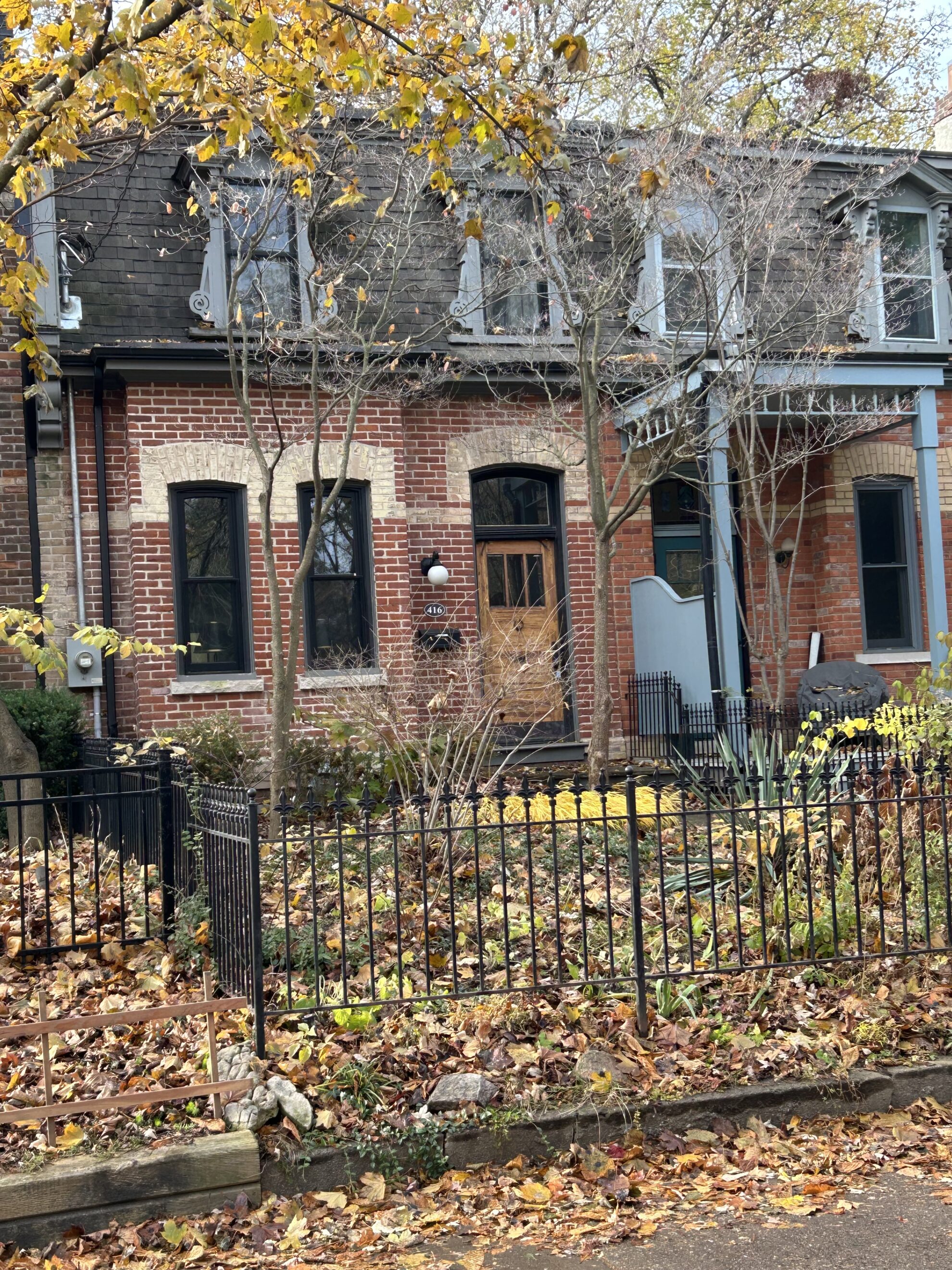
At the northeastern corner of Cabbagetown, where the land begins its downward slope towards the Don River, 416 Sumach Street is a house with a varied history. The house may not even have had an official address until about 1890, as earlier city directories did not list Sumach addresses beyond no. 386.
During the 1890s, the house went through a score of owner/occupants, including Letitia Wallace, widow of John, from 1890 to 1894. John Wallace was a bookkeeper with Charles Brown & Company, a carriage manufacturer at 6 Adelaide Street East, who died in the late 1880s.
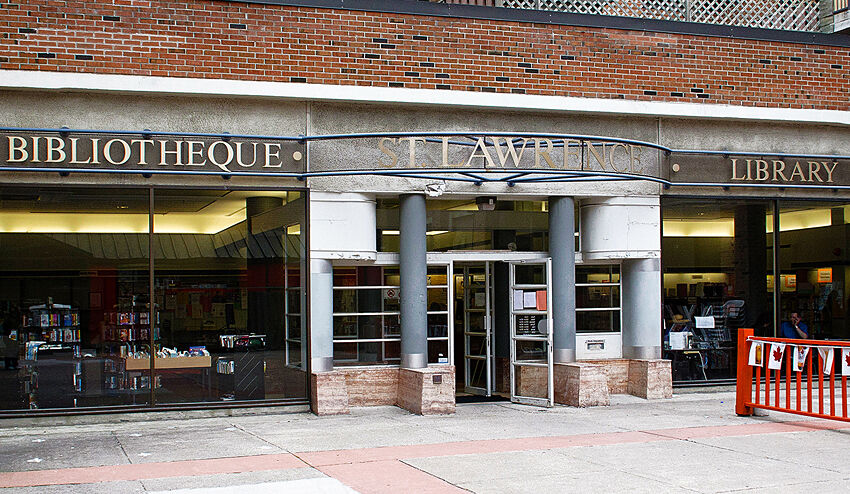
For the next six years, 416 Sumach was home to meat cutter Albert Charleton of Britton Bros., an early 20th-century mainstay at the St. Lawrence Market.
The Temple family resided in the house for two years (1902–1904). Charles G. Temple was a furrier with Bickell & Wickett, a tanning and leather sales company at 55 Front Street East. His son, Charles “H” Temple worked as a clerk with the Canadian Pacific Railway.
Both Temples stayed in Cabbagetown after leaving Sumach, Charles senior to 113 Winchester Street, and Charles junior nearby at no. 77.
Next was Fred Garbutt (sometimes spelled Garbett in municipal books), a teacher at Toronto’s Central Business College, then located at 398 1/2 Yonge Street. Fred moved out within a few months. Later directories have him living across town at 234 Euclid Street.
Elizabeth Greene, widow to Irish ex-pat James Greene, was sometimes listed as living at number 416 Sumach between 1905 and 1907, but other references have her residing at 418.
A Toronto Daily Star item of July 28, 1905 recorded this: “Miss Minnie Greene of Stranwellis Road Belfast, Northern Ireland, is spending a few weeks with her aunt, Mrs. E. Greene, 416 Sumach Street.” The Globe and Mail reported the same thing the next day.
The period 1907 to 1917 saw several short-term residents at no. 416. Furniture dealer Thomas Storey (1907) was succeeded by machinist Charles Cunningham from 1908 to 1910. Another teacher, Frederick Dearborn, listed as a “business college” instructor in the 1911 census, ruled the roost from 1910 to 1912.
“Shipper” James Stamp resided there from 1912 to 1916 and was succeeded by Henry Conroy, (born in 1883), a salesman with W&D Dineen Co., supplier of hats, caps and furs from its store at Yonge and Temperance Streets.
One of the more colourful owner/residents of no. 416 Sumach was Frank Greene, who is described as involved in “aeroplanes”, and later as a machinist and mechanic with the City of Toronto. Frank Greene lived there from 1918 until 1934 with wife Florence and daughter Dorothy.
In 1930, 416 Sumach served as a “Registration Booth” for the Canadian federal election, which saw Conservative Party leader R.B. Bennett defeat Liberal stalwart William Lyon MacKenzie King to become prime minister in the early Great Depression years.
Occupants of 416 Sumach over the next few decades include William Fleming, a caretaker at the Eaton’s department store (1935–1940), and Joe Brown, an employee of the Coulter, Copper & Brass Company Limited, located in a block of homes from 113-121 Sumach (the opposite side). After Joe Brown’s passing around 1946, his wife Grace remained at the home until 1961.
Like other aging homes in Cabbagetown, no. 416 Sumach had several short-term occupants from the early 1960s until the mid-1970s. Then Lois Smith lived and worked there for 15 years, from 1975 until 1990.
The first principal ballerina of the National Ballet of Canada, Smith opened a dance studio in Toronto in 1969, and by 1975 had moved the school to her home at 416 Sumach. Smith’s dance school eventually became part of the performing arts program of George Brown College. Lois Smith died in January 2011 at age 81.