

Christopher Hume –
What, exactly, will be the legacy of the World Cup in Toronto? It’s still early days, but already we know it won’t be financially positive.
Despite the brave talk, the FIFA blowout was an economic disaster; it cost the federal, provincial and municipal governments a staggering $1 billion. That was for a mere 13 games, seven in Vancouver and six in Toronto. Contrary to expectations, hotel bookings were actually down and fewer soccer fans showed up than anticipated. By any measure this could only be considered a dud.
Hang on, say proponents, the event was worth the price because it raised the profiles of the two participating centres. It put them on the world map; countless millions around the globe viewed these cities on television and, promoters insist, loved what they saw.
Fair enough, but in truth most of the world has long been aware of Toronto and Vancouver. Even better, both are widely admired and regularly rank among the planet’s most liveable cities. From that perspective, it’s unlikely the World Cup changed anything. At best, it confirmed what many already thought.
But, but, but…Soccer types will insist that the massive shindig was justified because it will raise the popularity of soccer (or as Europeans call it, football) across Canada. Inspired by the likes of greats such as Erling Haaland and Kylian Mbappe, they argue, kids everywhere will suddenly take to the pitch hoping to become rich and famous stars.
Perhaps, but don’t hold your breath; Canada remains a hockey culture. Basketball is the only sport that has come close to challenging its historic supremacy. In this country, soccer is child’s play.
And yet, for Toronto, the value of the exercise was enormous. Keep in mind that we are a city of immigrants; indeed, Canada is a country of immigrants. The overwhelming strength of the city and country lies in our ability to integrate people from all corners of the planet.
This may not sound like much but it is a quality worth celebrating. Look no further than Donald Trump’s America to see what can happen when immigrants are not just unwelcome but demonized, attacked and rounded up. In recent years, the United States and much of Europe have turned against migrants – now considered “aliens” – with brazen, even fatal, brutality.
As shocking as it is, the violence unleashed by Trump in the Land of the Free has affected (infected?) Canada. Inevitably, since the 1960s and 70s when they were opened up, our immigration policies have grown markedly less generous. But without immigrants, the Toronto we inhabit today would be a pale shadow of its current self. Because of immigration, a city once cold, bland, repressed and suspicious of the outside world became home to an extraordinary mix of races, religions, languages and cultures. Though not without its difficulties, Toronto has become a model, even a beacon, of tolerance and open-mindedness.
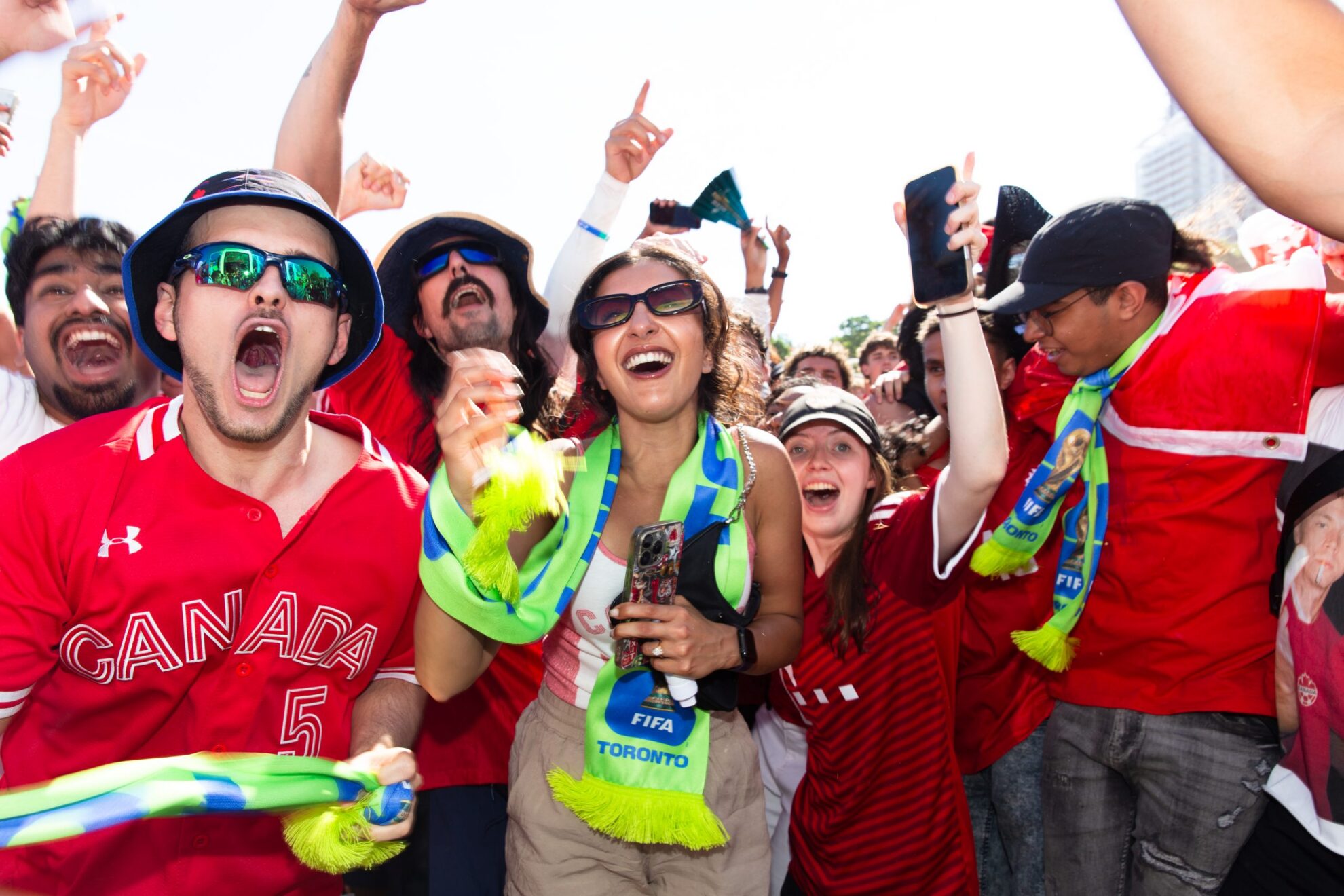
These qualities have been severely tested in recent years, but the World Cup was a powerful sign that no matter where the teams came from – Cote d’Ivoire or Panama, Qatar or Senegal – local residents cheered for them. Each squad represented a segment of community. In a city of immigrants, that’s no surprise but a sign of strong civic health, a timely affirmation that Toronto belongs to everyone.
Whether or not this is the most diverse city in the world doesn’t matter; the point is that many Canadians have chosen to live here. They are Canadians by choice, not accident of birth. Canadians want to be Canadian.
Though dismissed by some, the argument that Canada is the quintessential “post-modern” state deserves reconsideration. Canadians have long rejected the primitive heart-on-sleeve patriotism practised by Americans, but the advent of Trump has breathed new life into the idea of a society based on something other than blood, shared history and foundational mythology.
Canada has moved beyond traditional notions of ethnicity, cultural conformity and nationalist identity. It is based on a more civic approach to accommodation, citizenship, identity and, yes, international soccer tournaments. As the World Cup reminded us, in Toronto, no matter wh

2 Comments
I enjoy reading the hard copy of The Bridge, and now I have a second option of reading it on line!
Why does it cost us $1 Billion when FIFA’s profit for World Cup was $9 Billion???