
Dennis Hanagan –
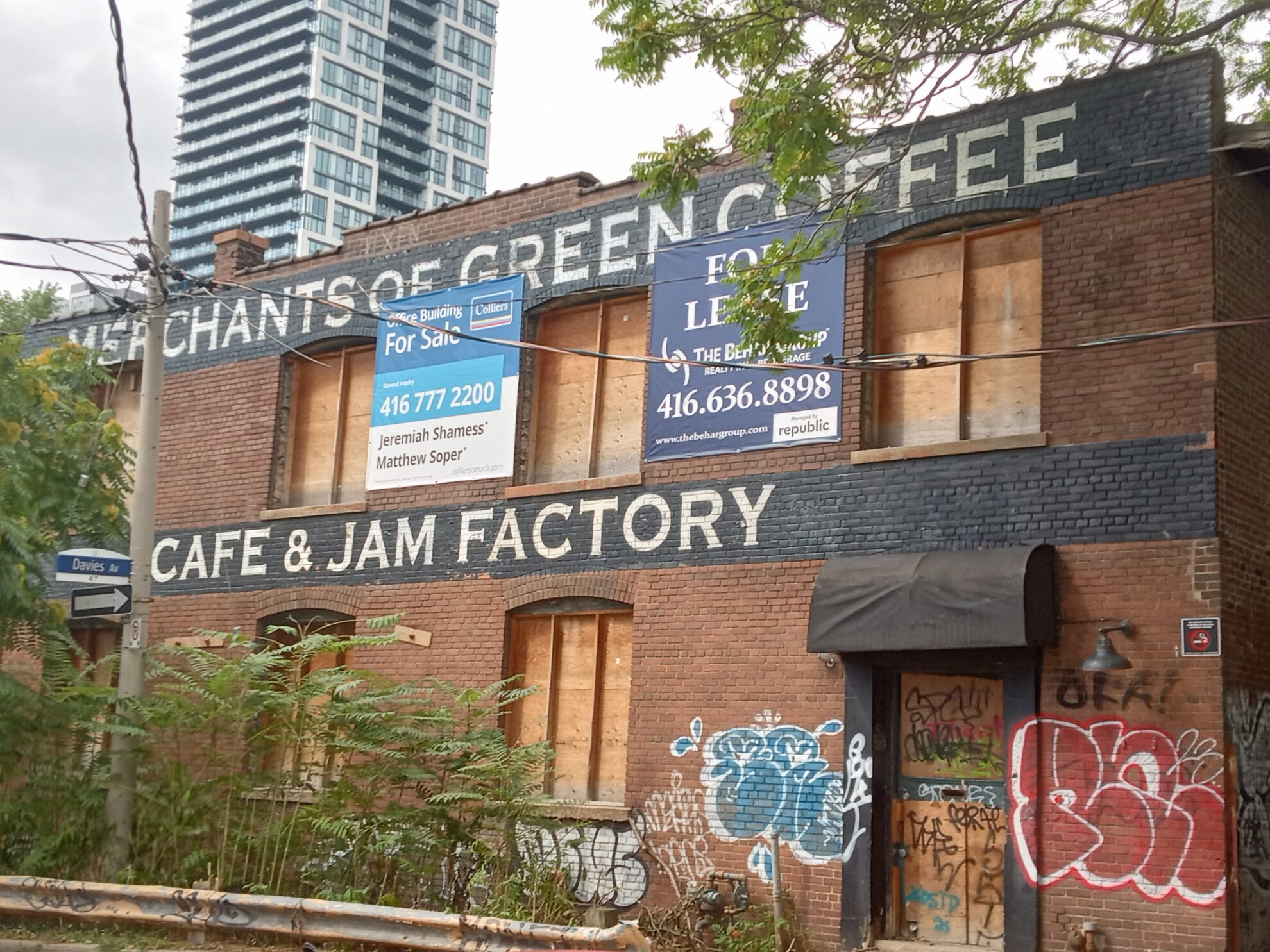
Meagan Thibeault has fond memories of working more than 10 years at Merchants of Green Coffee in the Riverside neighbourhood: looking out the window over the vast downtown landscape or joining others on the rooftop to watch vibrant sunsets.
“Just looking out over the Don Valley from the window of the café and seeing the valley, the sunsets and the CN Tower … it was so special,” Thibeault told the bridge. “We had a little, tiny ladder to the rooftop and there were no railings or anything and we would just go up there and hang out.”
That rooftop is gone now because 2 Matilda Street was gutted by what police called a suspicious fire on the night of October 14. The building was so severely damaged that Toronto Fire Services ordered it immediately demolished. A remnant of Toronto’s industrial age, gone.
The city identified the building, in Ward 14 (Toronto-Danforth), during a preliminary review as a potential candidate for inclusion on the city’s Heritage Register, but no recommendation was brought to City Council.
Quin Zavislake’s dad, Derek, established Merchants of Green Coffee in 1996 along with his brother Brad, and moved it into 2 Matilda the next year. The business ceased operations in 2021 amid the challenges of the Covid-19 pandemic.
Growing up, “my brother and I spent countless hours there,” Quin recalls, “running through the building, jumping on coffee bags, exploring its rooms and even celebrating birthdays.” Later they helped unload “enormous shipments” of green coffee beans.
Quin says his dad and uncle shared a deep appreciation for the building’s history and raw beauty in its wooden pillars, original floors and exposed beams. “Brad was instrumental in transforming the space, personally undertaking much of the work to create the retail store, café and offices.”
Thibeault remembers a bell clanging when she stepped through Merchants’ front door. “It brought you to another era,” she says. “When you walked in, it was this magical experience. It was a completely unique space in the city.”
Sources differ as to the origin of the building. LoopNet Canada says it was built in 1889 and considered an iconic property. EventSource says it was built in 1868 and featured “stunning sunsets.” Quin’s dad and uncle commissioned research on 2 Matilda, but Quin says the date remained uncertain.
The building was designed by English-born Charles Herbert Acton Bond (1869-1924), a prominent Canadian architect of his day.
The property’s industrial history appears to begin with a tannery, followed by operations associated with Shirriff Jam Company, according to Quin. Referencing leslieville.com says Matilda Street and its surroundings became a “bustling industrial powerhouse” in the early 1900s.
Over time, the Merchants café created a community of neighbourhood people and outside visitors. It brought together artists, students, neighbours, professionals, environmentalists and coffee enthusiasts “not just for an exceptional cup of coffee, but for the atmosphere,” says Quin. It was also home for technology businesses, people working in renewable energy and craftspeople such as metalsmiths and leatherworkers.
It was an atmosphere that Quin’s dad revelled in, even holding a coffee school. “He’d show up without a script, full of enthusiasm, and teach a room of curious people about everything that went into a truly great cup of coffee,” says Quin.
Derek Zavislake talked about Honduran coffee growers and their environment, describing the journey behind coffee “from the people who grew it to the environmental impact of producing it,” says Quin.
“Very few of these types of buildings remain in the city with this sort of history,” Thibeault says. “We so often see them being sold, being demolished, being renovated so that you can no longer see what they originally were.”
Quin says the building may be gone, but the ideas born within it, the people it inspired, and the work it set in motion “are still very much alive … I think that’s a beautiful legacy to leave behind.”