

Christopher Hume –
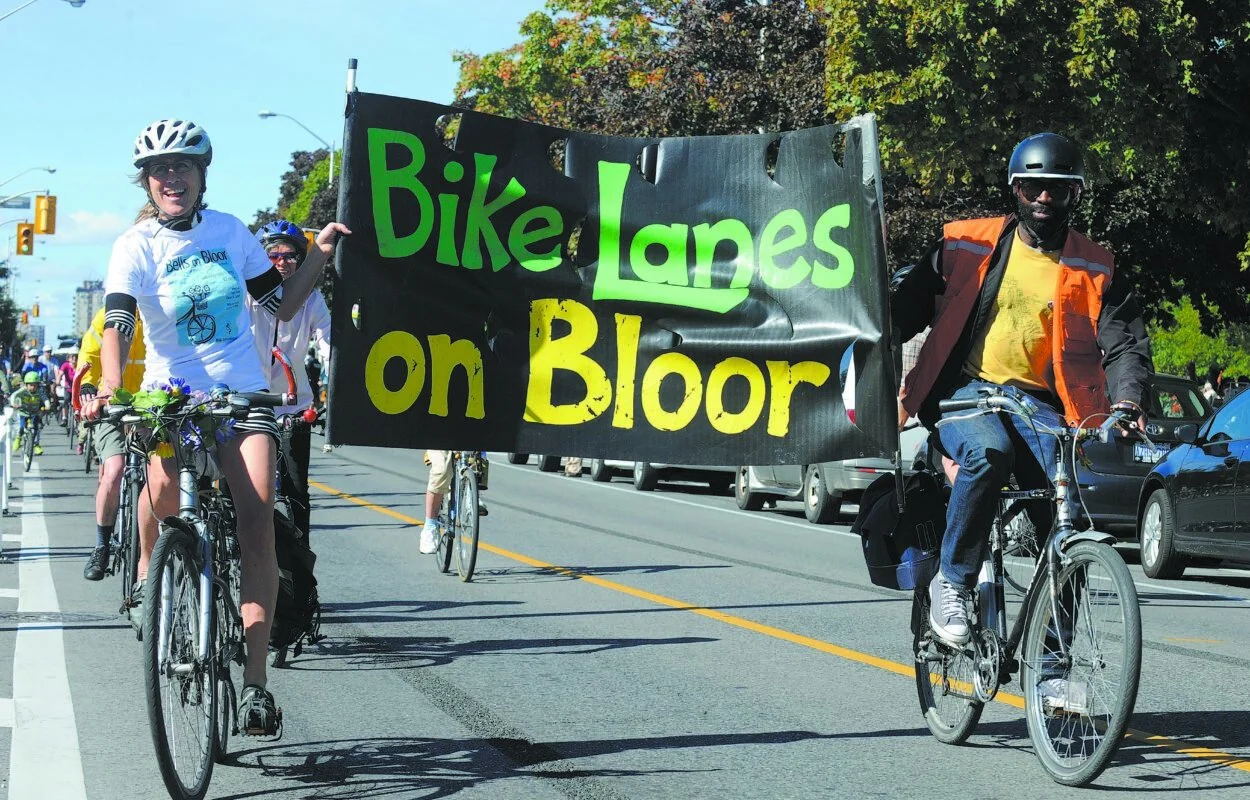
When the Ontario Court of Appeal ruled recently that Premier Doug Ford has the legislative right to remove bike lanes from streets of Toronto, knee-jerk pundits hailed it a “victory.” In fact, it was anything but, not just because bike lanes are not a constitutional right but because the decision was a slap in the face of democracy.
The move to install them was taken by Toronto City Council, whose mayor and members are –everyone – elected. For better or worse, they speak for the community. The will of Torontonians, as expressed by council, should matter. Sadly, it doesn’t.
As Ford has reminded us yet again, in Canada, municipal democracy is largely a myth. It exists at the pleasure of the province. Any municipal action can be overruled by Queen’s Park whenever it chooses. Local officials can huff and puff all they like, but the Constitution can always put them in their place. They are little more than window dressing.
In reality, their role is less to represent voters than to uphold the illusion of democracy. Until recently, City Hall couldn’t install a speed bump without provincial permission.
In the 2023 mayoral election, Mayor Olivia Chow received 269,372 votes, whereas in the 2025 provincial election, Ford got a mere 15,120 votes in his Etobicoke North riding.
Ford is just one of many premiers who have intervened in civic politics despite fierce opposition. Before Ford, Mike Harris amalgamated the six boroughs that now comprise Toronto, ignoring bitter opposition from every side. Even Bill Davis, among the most enlightened premiers of any political stripe, overruled at will. It was Davis, not the mayor or City Council, who killed the Spadina Expressway in 1971. Back then, Toronto Mayor William Dennison approved of the scheme, as did most “experts” including the then Ontario Municipal Board.
But Davis’ intervention was made for reasons that stand in stark contrast to Ford’s. “If we are building a transportation system to serve the automobile,” Davis famously told the Legislature, “the Spadina Expressway would be a good place to start. But if we are building a transportation system to serve people, the Spadina Expressway is a good place to stop.”
By contrast, Ford favours the automobile above everything but beer. But as Davis noted so eloquently, the choice he made was between two irreconcilable alternatives, cars or people, one or the other, not both. Today, the provincial Tories choose cars over people.
The Liberals, sadly, are no different; Mayor John Tory’s 2016 proposal to toll the Don Valley Parkway and the Gardiner Expressway was quickly shot down by Premier Kathleen Wynne, who feared it would anger suburban drivers.
Despite the obvious lack of democracy, provincial interference has benefitted Toronto on at least one occasion. But note the infantilizing effect provincial primacy has on city councils. Knowing they can be overruled at the drop of a provincial hat renders their efforts all but meaningless.
We have reached the point where a serious mayoral candidate – Brad Bradford – is running on a platform that includes a promise to rename Sankofa Square. Incidentally, Bradford has also pledged to get rid of the very bike lanes that Ford plans to remove. When it comes to city politics, if you can’t beat the province, you join it.
Ironically, Bill Davis demonstrated the courage voters hope for but rarely expect. Former mayors Mel Lastman, Rob Ford and John Tory succeeded mostly by playing it paralyzingly safe. Their main concern was to keep taxes as low as possible and punt the cost of deferred maintenance and delayed capital expenditures down the road. That’s how the city lost its lustre and why Chow, like Davis, deserves respect for doing what had to be done – in Chow’s case, raising property taxes – despite the political risk.
At the annual Association of Municipalities of Ontario conference last month, the message to Doug Ford was familiar: cities and towns, which deliver something like three fifths of the services on which people rely, need more revenue, not to mention stable long-term funding. Big spenders like Ford and Prime Minister Mark Carney are quick to rack up public debt, but loath to support the cities that pay their bills. None more so than Toronto, which alone generates 20 per cent of Canada’s GDP.
Perhaps it’s time for them to take another look at that fable about the farmer who killed the goose that laid the golden eggs.

1 Comment
This article deals well with the issue of provincial-municipal relations up to the specific further issue re bike lanes – not so much requiring Provincial approval in the first place to do things the Municipal Act grants the municipalities to do, but reversing those things after municipalities in good faith have already done and invested substantial tax payer dollars doing them. At the very least they should be reimbursed. But this should also be disallowed as arbitrary harm done by the Province despite its own municipal Act.