

Parul Gupta –
A new Rainbow Market and a dedicated electronic dance music stage joined familiar traditions as the Cabbagetown Festival returned for its 47th edition on September 12 and 13.
Matthew Mohan, executive director of the Cabbagetown Business Improvement Area, described the festival as a gathering for families, young people, seniors and newcomers. Its aim was to offer free, accessible entertainment while helping visitors discover the neighbourhood and its businesses.
Mohan said $85,000 went into entertainment and programming; 90 vendors came from Cabbagetown and 200 volunteers supported the event. The festival occupied Parliament Street from Gerrard to Wellesley and west on Carlton Street to Sherbourne.
The Kids’ Zone offered free activities, with local musicians, bands and entertainers hired for the festival. There were hands-on activities, too.
At the Cabbagetown Boxing Club’s stall, visitors put on gloves and practised punches against pads held by club members. The club has operated since 1972, with a focus on local youth.
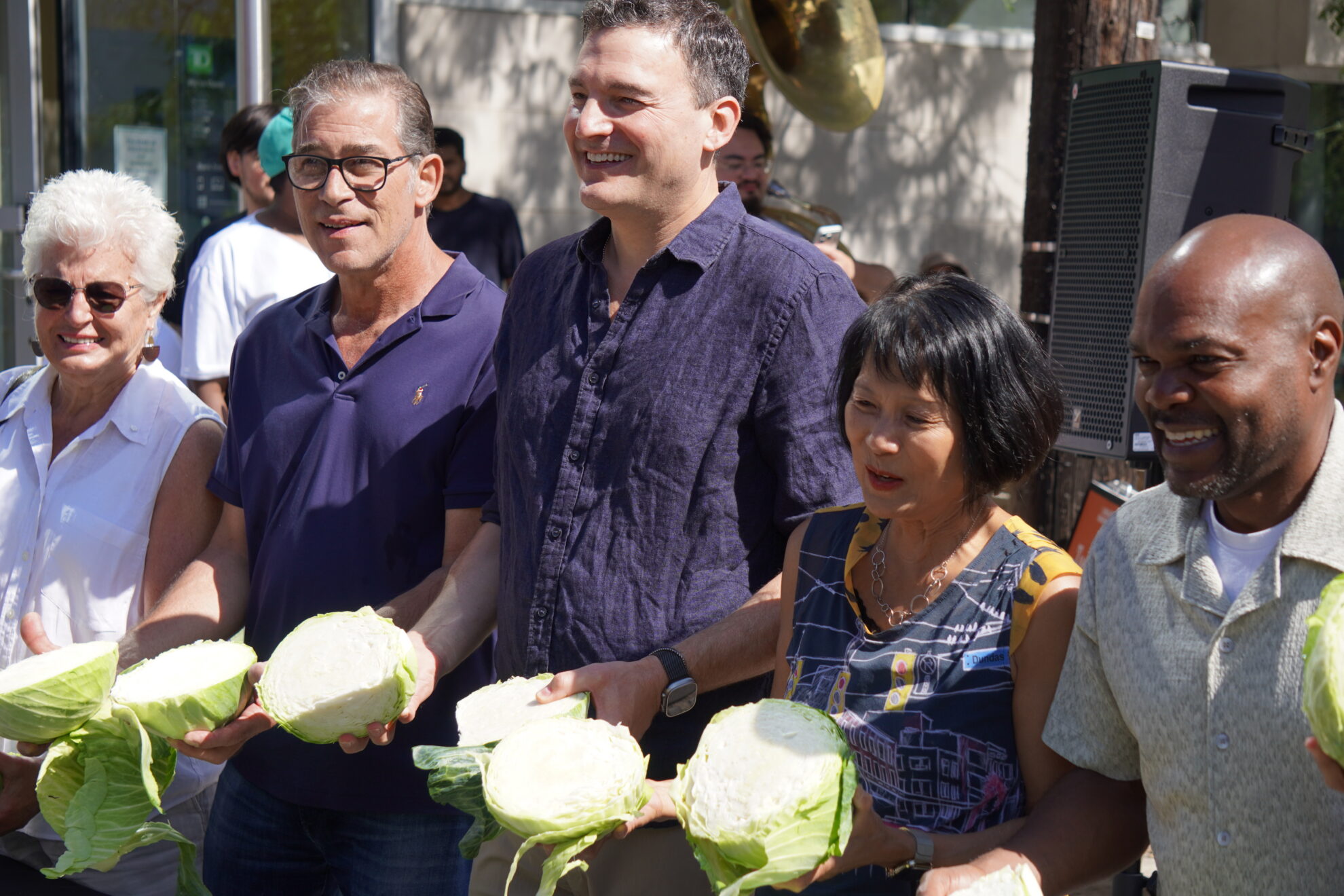
At the opening ceremony, Mayor Olivia Chow and three Toronto Centre politicians, Councillor Chris Moise, MPP Kristyn Wong-Tam, and MP Evan Solomon, participated in cabbage cutting, a tradition evoking the area’s name. According to the BIA, Irish immigrants who settled in the neighbourhood in the 1840s grew cabbages and other vegetables in their front gardens.
After the ceremony, Chow visited stalls and sampled food while chatting with children and other festivalgoers. Wong-Tam urged visitors to support local businesses amid trade tensions with the United States. “Shop local! Buy Ontario! Buy Canada!” she said.
Other displays at the festival explored Indigenous histories. The BIA acknowledges that Cabbagetown lies on the traditional territory of several nations, including the Mississaugas of the Credit, the Anishnabeg, the Chippewa, the Haudenosaunee and the Wendat, and that the land is covered by Treaty 13 with the Mississaugas.
On stage, Rosary Spence, a Mushkego Cree singer from Fort Albany First Nation, performed with a hand drum. The Indigenous Celebration Stage’s published program included ceremonies, fancy shawl dancing, contemporary music and Métis storytelling.
The BIA’s Mohan said queer people had been part of the festival from its beginnings, illustrated by a history panel tracing queer residents’ contributions to Cabbagetown and recalling local gathering places. The new Rainbow Market gave 2SLGBTQI+ businesses and makers a dedicated space. Electronic dance music had long been part of the community’s music scene. Adding a dedicated stage was an effort to connect younger people with the festival and give that music a place in its programming.
Alongside neighbourhood businesses were some from elsewhere in Ontario, including Waterloo’s Stefan Marinov of Koka-Bora Creations. Marinov said he began with custom furniture before making wooden pens in 2006 and selling them in 2013.
Other vendors brought their own family traditions and working histories. At Delicious All Day Coffee, Matthew and his parents, Wilson and Claudia, sourced coffee beans from their family’s farm in Colombia. Tash Law of Souperwell introduced visitors to Chinese herbal soups. Family recipes were also on the menu at Gebeta, an Ethiopian barbecue and catering business serving spicy beef tibs.
Kerry-Ann Wildsmith, founder of the soap vendor Angelee & Co., returned for a fifth year and said she had noticed increasing foot traffic. This time she expanded her range to include shampoo bars and fragrance soaps.
For next year, Mohan hopes to expand the Rainbow Market and develop more ambitious electronic music programming. Earlier financial commitments would help organizers plan that growth while keeping entertainment free, he said.