

Chris Glover, Op-Ed –
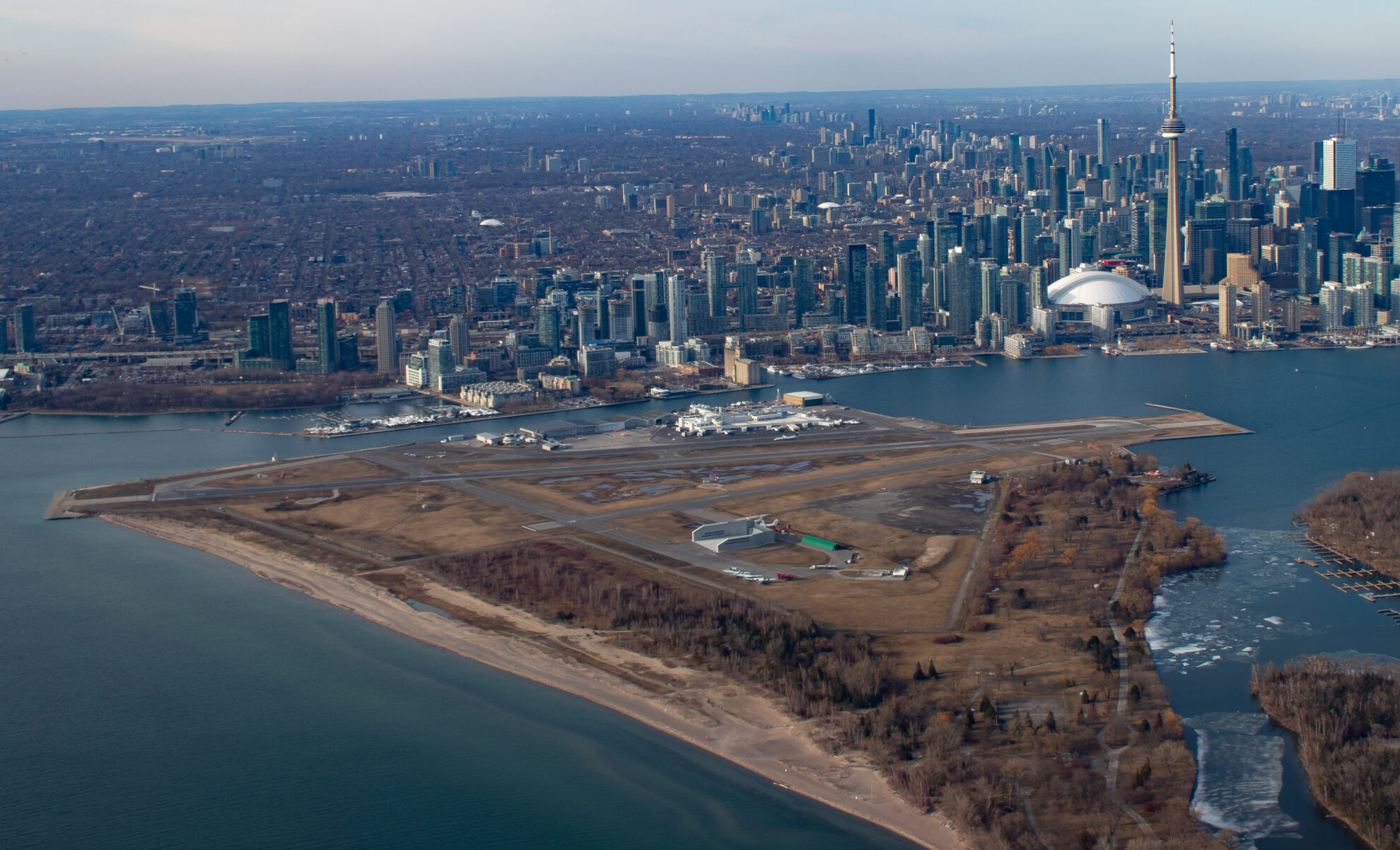
After months of fighting to save Toronto’s waterfront, Ontarians won a pause in the province’s plan to have jets flying out of Billy Bishop Airport. But just days after the federal announcement, when Torontonians were still celebrating the victory, Prime Minister Mark Carney opened the door to eventually allowing jets, saying “forever is a long time.”
Throughout the debate, the only substantive proponent of the expansion was JP Morgan, the Wall Street bank that owns the terminal building and makes money from each passenger. With ridership down 30 per cent since the pandemic, expansion to the 10 million passengers Premier Doug Ford projected would turn a money-losing investment into a winner.
We should all be deeply concerned about the power of an American bank to influence our governments when we are in a trade war and under an annexation threat from the United States.
JP Morgan lobbied the provincial and federal governments to support the $5 billion expansion, and won support. The Toronto Star revealed that before the public fight over the expansion began, Ford and Carney shook hands on a deal in which Carney would support the Billy Bishop expansion if Ford supported the Alto high-speed rail project.
Through research and advocacy, residents exposed how damaging the expansion would be: noise, pollution, traffic congestion, the destruction of waterfront parkland, and the danger posed by jets landing or taking off every two-and-half minutes next to waterfront high-rises and schools. The expansion would engulf the Toronto waterfront, Canada’s number one tourist destination, in a perpetual cloud of noise and jet exhaust.
But the expansion plan, no matter how destructive, refuses to die because supporting JP Morgan’s investment in Billy Bishop is part of a bigger strategy. Carney has announced that he intends to sell off Canada’s airports. The rationale is that the funds go into a “sovereign wealth fund” to invest in other projects. He’s invited global investors to Toronto in mid-September to showcase the Canadian assets he is looking to sell, including our airports.
The idea of selling airports and seaports to private corporations, possibly American, when Canada is in a trade war and faces an annexation threat from the U.S., is as ludicrous as the idea of expanding Billy Bishop. Carney says the “sovereign wealth fund” would make money to invest in other infrastructure projects. But it seems more like a hand-off of public assets to global corporations than part of an investment strategy.
We’ve seen this playbook before. In 1997, the Harris Conservatives sold a 99-year lease of Highway 407 to an international conglomerate for $3.1 billion. The lease subjected Ontarians to paying tolls for 99-years and to perpetual congestion on the 401 as the conglomerate that controls the 407 sets the tolls to maximize profits while minimizing use and wear and tear costs.
The 407 lease is now worth $35 billion.
For almost a century, Ontario Hydro was a public utility that provided electricity at cost, about four cents per kilowatt hour. The final piece of it was sold for $9 billion in 2018 by the Wynne Liberal government. Ontarians now pay eight to 16 cents per kwh; and to keep the rates at that the level, the Ontario government subsidizes the private corporation that now owns Ontario Hydro with $7 billion a year.
Privatization of public assets leads to higher costs and the loss of public control. Our airports are our sovereign wealth fund, the transportation hubs that keep our economy moving. Losing control of them to private corporations will lead to higher taxes and passenger fees.
The secrecy, manipulation, and backroom deals that govern the Billy Bishop expansion should be a warning to all Canadians that if our air and seaports are sold to private corporations, they will no longer serve the best interests of Canadians but will be used to maximize the profits of private corporations.
Chris Glover was first elected to the Legislative Assembly of Ontario in 2018 as the Member of Provincial Parliament (MPP) representing the riding of Spadina-Fort York. He is the NDP’s Shadow Minister for Sport, Technology and Innovation, and Democratic Reform.


1 Comment
100% agree. What returns have we seen from crown corporation s