
Justin Young –
For many Torontonians, Allan Gardens is a quiet refuge: a lush, humid escape from the city, especially in the colder months. Its historic greenhouses are filled with tropical plants, cacti and seasonal displays that draw visitors year-round.
But beyond the succulents and orchids, something less visible, and arguably more urgent, is growing.
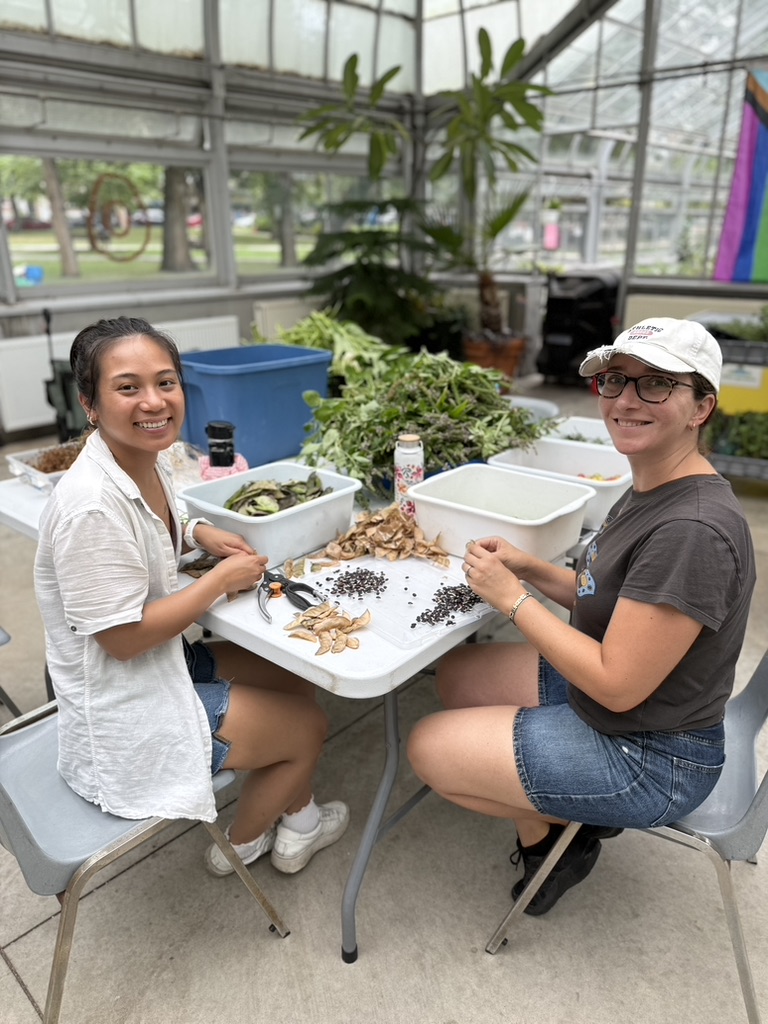
Tucked within this urban oasis is a volunteer program that grows produce for local food banks, right in the heart of downtown Toronto. This little-known initiative speaks to a larger issue: how can cities respond creatively to food insecurity while using existing public spaces?
“At a time when demand for food banks continues to rise, we’re looking at how every available resource, including our greenhouses and gardens, can contribute to the solution,” says Matt Canaran, executive director of Friends of Allan Gardens.
The non-profit organization works alongside City of Toronto staff and community partners to support programming at Allan Gardens. In recent years, that has increasingly included urban agriculture initiatives run by horticulturalist-in-residence Amanda Johnson to grow edible plants that are distributed to those who need them most.
“In addition to being delicious, we want the food we grow to be culturally sensitive” says Johnson.
“From April to December, the volunteers are harvesting food for the food banks. In early spring, the bok choy, pea sprouts and green onions are ready to be harvested. Crops like tomatoes, okra, shiso mint and pole beans come later in the year with the heat.”
While its scale may be modest compared with rural farming, the program’s impact is tangible. Fresh produce grown locally can supplement food bank offerings that often rely on non-perishable donations, bringing both nutritional value and dignity to recipients.
The initiative also offers proof that even in dense urban environments, small-scale, community-driven solutions can make a difference.
This work is supported in part by Seeds of Hope, an annual fundraiser organized by the Friends of Allan Gardens. The event brings together neighbours and supporters to raise funds and awareness for the organization’s programming, including its food-growing.
Seeds of Hope is also an opportunity to reframe how people think about Allan Gardens.
“There’s a real sense of discovery when people learn that food is being grown here for the community,” says Canaran. “It shifts the perception of the gardens from something you visit to something that actively gives back.”
That shift feels particularly relevant when many Toronto residents are grappling with rising food costs and economic pressure. Food insecurity is no longer a distant issue; it’s affecting a growing number of households across the city.
Initiatives like this not only preserve public spaces but activate them in new and meaningful ways. They also highlight the importance of local engagement. The program’s success depends not just on funding, but on people understanding what’s happening within these greenhouses, and choosing to support it.
For those who pass through Allan Gardens regularly, the idea that it could help address food insecurity might come as a surprise. But solutions to complex challenges are often closer than we think, growing quietly in plain sight.
Seeds of Hope organizers hope more people will notice, get involved and help sustain the work. Because at Allan Gardens, the gardens aren’t just for looking at, they’re part of a growing effort to nourish the city.