

Laura Hull –
As Toronto’s Regent Park revitalization entered a decisive chapter this summer, residents weighed in on how to direct a multimillion-dollar community benefits package amidst criticism of the community consultation.
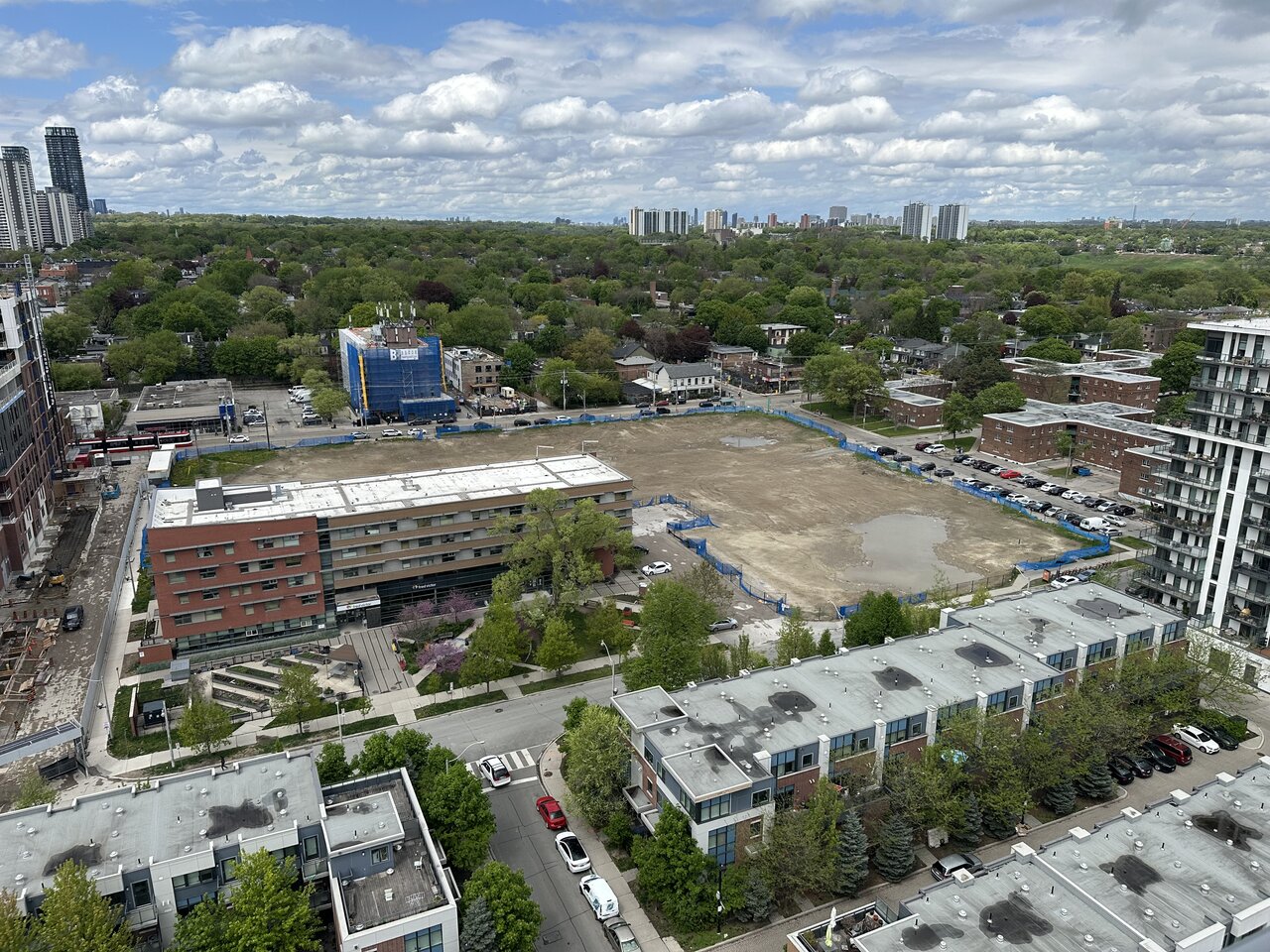
Phase 4 and 5 of the 20-year project will bring hundreds of new homes, a library and public spaces. Earlier phases, delivered in partnership with Daniels Corporation, produced 1,450 replacement rent-geared-to-income units, 427 affordable rentals, retail space, parks, and community facilities including the Pam McConnell Aquatic Centre. Phases 4 and 5, now led by Tridel, are expected to span a decade and add 633 more rent-geared-to-income units, up to 637 affordable rentals, and thousands of market condos.
The Toronto Community Housing Corporation (TCHC) board received a progress update in July confirming that construction on Building 4A, a 271-unit rent-geared-to-income rental tower at Gerrard Street and Dreamers Way, is set to begin in September after months of delay tied to federal financing approvals.
Market condominiums in towers 4B and 4C, adding 731 units, are moving through design review and will help create a new linear park. Later in Phase 5, two more rental buildings (5C and 5D) will anchor a civic square that includes a long-promised Toronto Public Library branch.
At TCHC’s July board meeting, community voices raised concerns about a $26.8 million community benefits package. Residents cast ballots on three investment options: in community spaces, educational scholarships, or job training and small business support.
All three packages include $13.4 million in tenant hiring targets through Tridel and its trade partners, plus $3.5 million for community grants over the next decade. “This is a major milestone in giving Regent Park residents a say in their own future,” Yves Cheung, TCHC’s chief development officer, said in the board report.
But longtime resident and community leader Walied Khogali Ali told the board the process has strayed from commitments made in 2020, when an endorsed framework tied benefits directly to Regent Park’s Social Development Plan.
“Today that commitment is being broken,” he said. “This is not participatory budgeting. This is not what the community agreed to, and this is not the Regent Park model that has guided over a decade of revitalization.”
Khogali urged the board to restore residents’ role in overseeing funds allocations, stressing the stakes for community safety and stability. “In 2023, Regent Park achieved a milestone: zero gun-related deaths, a result made possible by strategic investments in community-led social development. This is proof of what’s possible when residents are trusted to lead.”
TCHC staff defended their approach, pointing to three years of consultation. “We’ve been working with the oversight working group to design and implement a community engagement plan that has seen over a thousand residents provide input,” said Will Mendes, TCHC’s director of community engagement.
He reported that by mid-July, 627 residents had already voted, with a goal of at least 1,000 participants.
Board members pressed staff on whether residents were truly decision-makers or simply offering recommendations. “I’d like to hear back how we could better engage that community to be part of the decision-making process as opposed to being just recommendations,” said director Brian Smith.
The revitalization of Regent Park began in 2006 as one of the largest urban redevelopment projects in Canada, with a goal of transforming the former 69-acre social housing complex into a mixed-income, mixed-use neighbourhood.
Tenants at Evolv, a rental building built in an earlier phase, have protested that rent hikes as high as 20 per cent contradict the project’s mission of community stability.
At the July TCHC meeting, CEO Sean Baird acknowledged tensions but defended the process. “There’s been tremendous improvements that have been made within Regent Park… with the support of so many different community organizations and agencies,” he said. “But there are also learnings from earlier phases. A substantive increase in community economic development investment is one of those learnings, and it’s the most significant increase we’ve seen across all of our revitalization projects.”