
By Dennis Hanagan –
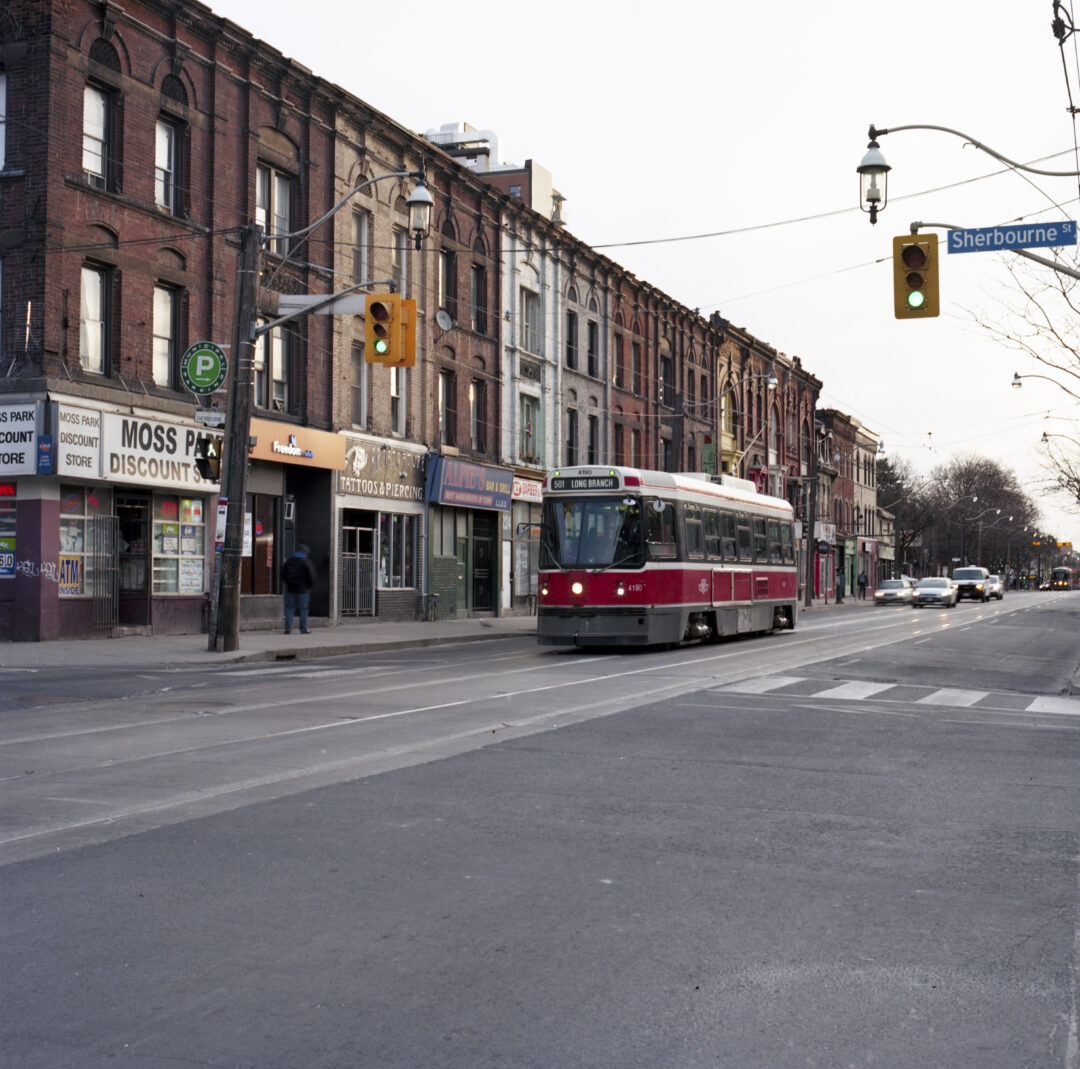
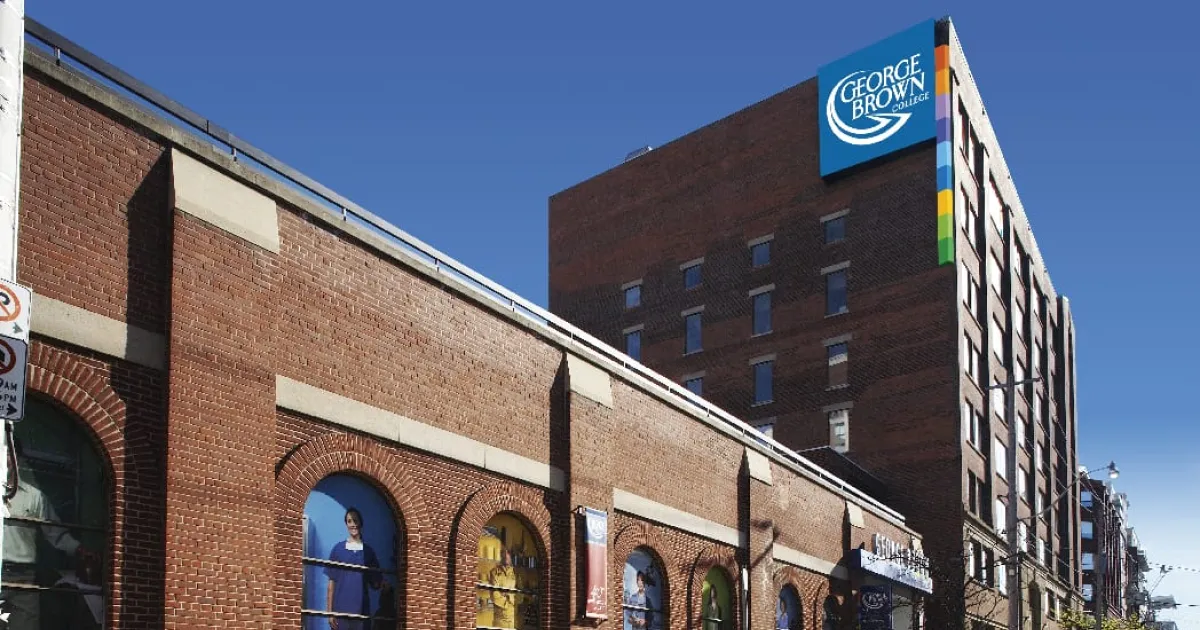
Cars and pedestrians rush by outside, but behind the scenes at George Brown Polytechnic’s three campuses – one in the Downtown East – research and innovation work is quietly developing new products and services and getting them to market.
“Any sector or industry can collaborate with us if their project aligns with any of the academic programs that exist at George Brown,” says Dr. Krista Holmes, associate vice-president of research and innovation.
“We work across three priority areas: product development, sustainability, and social innovation…our research teams are working on themes that are directly relevant to all of us living in society today and align with the goals of the college.”
Students are involved with research and innovation as part of their curriculum or as paid part-time research assistants. Faculty members supervise students, giving them advice and guiding them through the research process. Graduate students are hired to assist.
The website for Colleges and Institutes Canada says research at colleges helps businesses become more competitive in the global economy by developing and commercializing new technologies. “In 2023-2024 these projects delivered nearly 9,000 new products, prototypes, processes and services,” it says.
Research Infosource Inc., a Toronto-based research, consulting and publishing firm, has ranked George Brown Polytechnic among the top 10 Canadian research colleges for several years.
Named after George Brown, who founded the Globe newspaper in 1844, the school opened its doors in 1968. Its research and innovation office began operating in 2007.
“Since then, we have worked with 2,167 community and industry partnerships,” says Holmes. That collaboration has offered more than 17,000 “student research experiences” and developed 2,301 iterations, “all of which are innovations of a kind.”
Here are a few projects involving the research and innovation office:
• Twelve fashion students worked with a group of women stroke survivors to design a blouse, brassiere and winter jacket that were fashionable and functional so they could dress themselves more easily.
• Plastics Flux, a Toronto business, shreds unrecyclable black plastic into sheets that are used to make tables, chairs and other furniture. The startup turned to George Brown’s Product Development Exchange lab to custom-build the sheets. “We asked around, and George Brown kept coming up. It felt like the best place to build something that had all the customizations we needed,” says Mohesan Sreekuladevan, Plastics Flux co-founder.
• The JavaConnects project developed the Java Music Club program to help seniors in long-term care homes overcome loneliness and depression by engaging them in social support groups. George Brown’s School of Computer Technology helped digitize that experience into a virtual program with photography, music and readings during the Covid-19 pandemic.
• In 2010, Clear Blue Technologies approached George Brown with an idea for a controller prototype that would integrate wind-generated electricity with another power source. Research teams tested, validated and prototyped the technology, designing product specifications that eventually allowed Clear Blue to outsource two-thirds of its manufacturing.
• A three-year project is addressing the complexity of literacy teaching in early-learning classrooms. It draws on digital technology and teacher development to allow educators to provide an innovative learning environment for students.
• The Supporting Peer Work project is developing resources for drop-in boards of directors, managers and supervisors that would aid peer workers who face structural and funding barriers as they try to help Toronto’s marginalized communities. The project’s goal is to create innovative training and employment opportunities for peer workers.
• The Communal Lunch Project is addressing food insecurity and social isolation in post-secondary student populations. A weekly recipe is broken down and each student is asked to bring one ingredient for it. At school they pool their ingredients to create a healthy meal while interacting with one another. A website for the project will guide students on how to stock a pantry and plan meals.
The goal of these research and innovation projects is to prepare students for challenges they’ll face in the working world.
“Not only do these opportunities provide students with the opportunity to gain practical experience and enhance their skills, they provide marketable workplace skills and innovation literacy to think creatively and apply problem-solving skills to diverse and intangible issues within industrial problems and contexts,” says Holmes.