
Christopher Hume –
Though all eyes will be on the pitch when FIFA’s soccer blowout begins later this month, the real action will unfold well beyond the playing field. Despite repeated reassurances from local officials to the contrary, it’s far from certain the city will be able to handle the hordes that Toronto’s six allotted World Cup matches will attract.
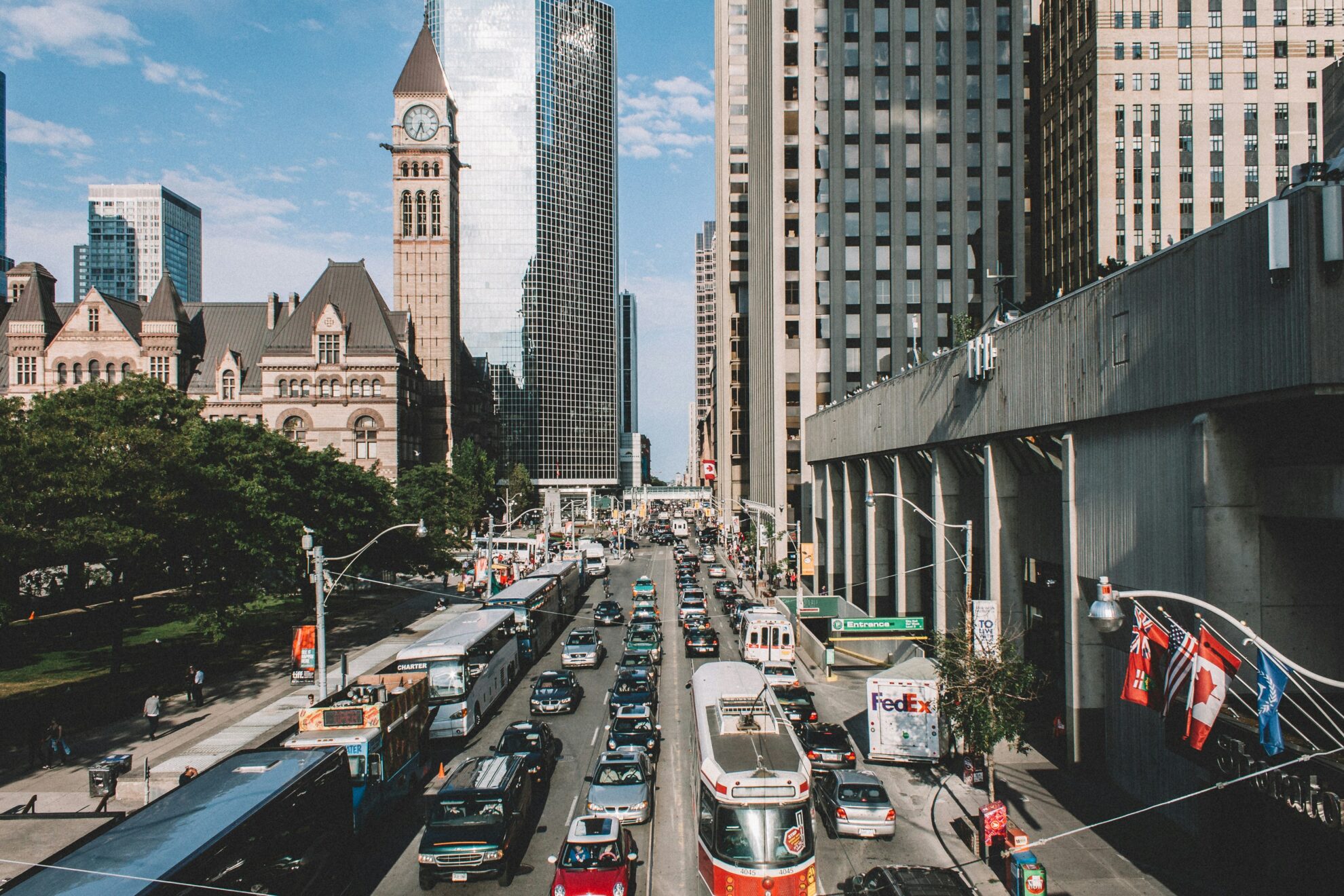
Indeed, there are good reasons to doubt their claims that things are under control — especially when it comes to transit, specifically, getting to and from the games at Toronto Stadium (formerly BMO Field). Given the historically dismal performance of the TTC and the GTA’s infamous congestion, the event could well collapse under its own weight.
Little wonder then that Geotab, an Oakville-based outfit that specializes in data analytics, put Toronto dead last in its recent Host City Rankings. Geotab examined how well the 16 cities can be expected to deal with the extreme logistics of the event. Toronto scored a dismal 3.99 out of a possible 10. The highest mark – 8.1 – went to Boston.
“The challenge,” says Geotab vice-president Mike Branch, “is moving people, goods and services during massive events. Everyone is impacted. We want to understand how well the wider road networks cope with local traffic, deliveries and day-to-day movement to help cities improve their road planning and routing networks.”
Toronto’s Mobility Plan assumes that 70 per cent of fans will take public transit to the newly enlarged facility, which now seats 45,736 people. Anything less would create serious congestion, already the daily rush hour. The worry is that local attendees will drive and that visitors, unfamiliar with the TTC’s notoriously inadequate signage and service, will overwhelm the system. Organizers also expect 20,000 visitors will attend Fan Festival at the nearby Beltway and Fort York.
The Mobility Plan includes controlled traffic lights, a parking ban on selected streets during games and prioritizing buses on Dufferin and Bathurst Streets. In addition, streetcar service on King Street will be “enhanced.” In other words, a whole lot of tweaking.
The thought of 65,000-odd punters coming and going at the same time is enough to send shivers down the spine of any Torontonian familiar with a city whose roads and transit network are barely able to cope with traffic even on a quiet Sunday afternoon. If there’s anything going on at Rogers Stadium or Scotiabank Arena, add another 80,000.
Says the city helpfully: “People are encouraged to plan ahead, allow extra time, travel outside peak periods ….” It also advises to us walk or bike. Just don’t tell Premier Doug Ford, who has spent his time in office ridding city streets of cyclists and pedestrians in his rush to please drivers.
Beyond soccer, perhaps the most revealing World Cup consequence will be whether such an event can actually manage to yank Torontonians out of their vehicles. Doubtful at best, but ultimately inevitable. It will take huge investments in public transit to restore mobility; without that, Toronto’s future is at stake. Already, the Canadian Centre for Economic Analysis points out, “congestion sets the regional economy back by $44.7 billion per year in social and economic costs.”
On the other hand, the hospitality sector says that hotel bookings are well below expectations. As we write, game tickets are still available, some going for more than $4,700 each, which means that only fans with the deepest of pockets are invited.
Speaking of expense, the price of the shindig has hit $1 billion, about $82 million for each of Canada’s 13 games. Who knew a sports event could cost so much? The reason? Most probably security.
Worse still, data from past games tell us that host cities almost never see a return on their investment. The payoff will come when the global spotlight shines, however briefly, on our fair city. It’s anyone’s guess whether the international attention will be fixated on the games – highlights include Panama vs Croatia and Senegal vs Iraq – or the spectacle of a city interrupted, one sinking under the weight of its self-delusions.
Though we like to pretend we are the Greatest City on Earth, that can sound more like a nervous attempt to hide a long-standing inferiority complex than a proud boast. Truth is that Toronto can achieve greatness; but that would require that we focus more on nuts and bolts than bread and circuses.