
Winnie Czulinski –
As many residents and participants are finding out, good TV is local TV. The often-challenged community of Regent Park has had its own television station since 2013 (digital since 2016). Its numerous videos, also available on Regent Park TV’s YouTube channel, reflect the area and its diverse stories – of housing, safety, culture, education, arts, celebration and more.
Recent RPTV videos range from “Regent Park Tower Breaks Ground as Community Watches Affordability and Return Rights” to “Anansi Stories: A Night of Storytelling, Culture, and Black History.”
The trailer for RPTV’s weekly news program begins: “In the heart of Toronto’s Regent Park, a powerful voice rises each week…It’s more than just a news program. It’s a lifeline, a mirror and a megaphone for one of Toronto’s most vibrant and resilient neighbourhoods.” At a time when mainstream news often ignores diverse urban stories, “RPTV Weekly News fills that gap.”
Regent Park TV is produced by not-for-profit organization Focus Media Arts Centre in the Daniels Spectrum at 585 Dundas Street East.
Video and photography production coordinator Dawar Naeem, originally from Pakistan, first worked with Focus Media as a videographer/editor, then a community journalist. “I came from a country where community empowerment is weak and unheard of.”
Through filming events and observing local initiatives, Naeem says, “I was able to realize the importance of an active community working together towards common goals for the betterment of their quality of life.”
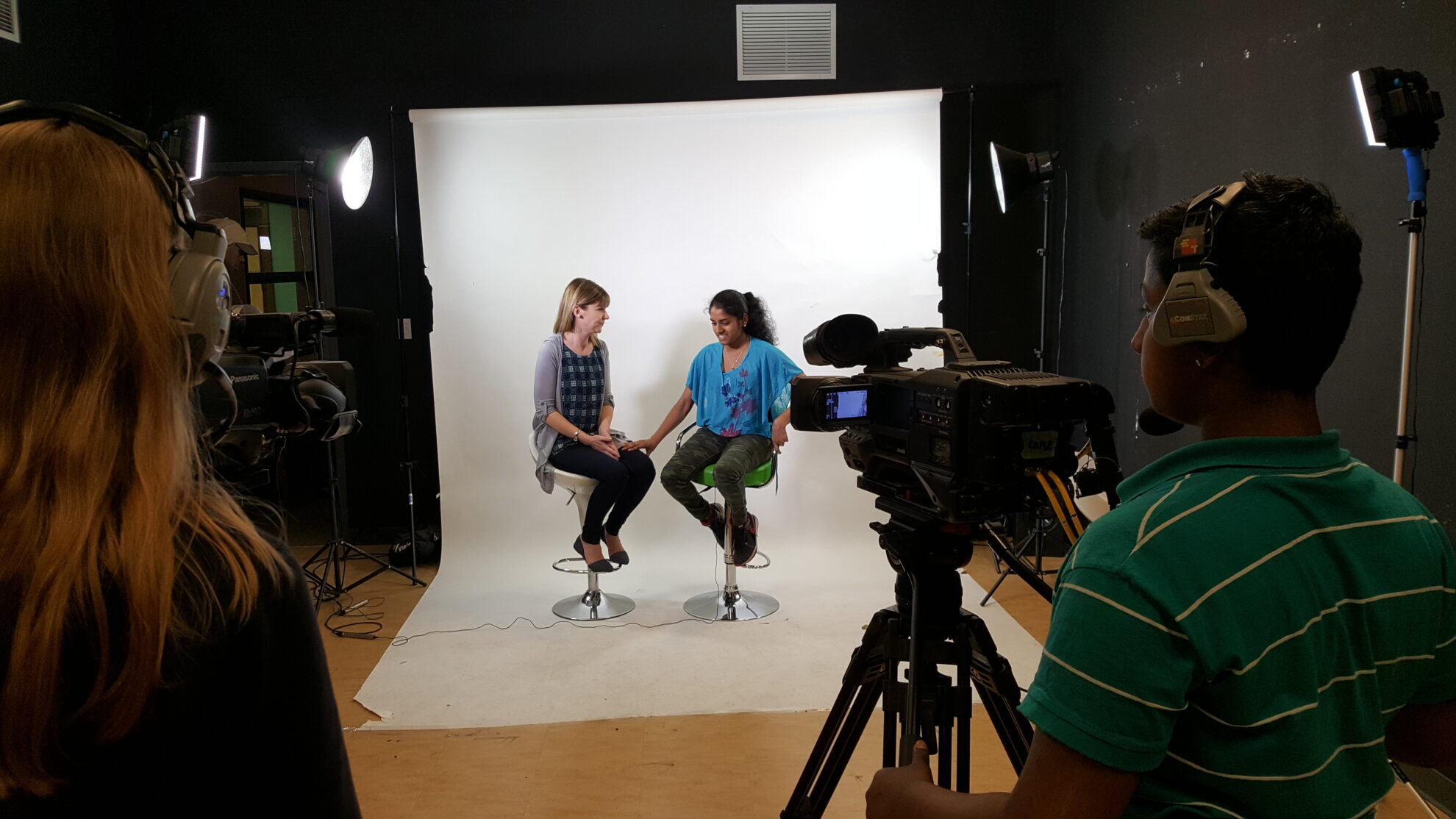
At RPTV young people (aged 15 to 29 years) can learn television broadcasting, from storyboarding to studio camera operations, and skills such as negotiation and leadership, all in a youth-driven team environment. This RPTV mentorship program prepares interns for further education and communications careers.
Award-winning “30 Under 30” filmmaker-entrepreneur Mariam J. Momani took an RPTV internship, when she was new in Canada from Jordan, in 2016.
“It helped me understand the power of media representation, especially for communities that are often underrepresented. That early experience gave me the confidence and the foundation to build something meaningful of my own.”
At RPTV, Momani co-produced a documentary, Being Canadian. With an Honours B.A. in Communications and Media, she founded several initiatives, including an online Arab-Canadian platform, producing more than 15 shows.
For Focus Media Arts’ executive/artistic director Adonis Huggins, taking George Brown College’s Community Worker Diploma Program in 1988, and his work with Black theatre/culture in Nova Scotia, laid a strong foundation. Exploring Canada’s racist history and ongoing Black-community struggles deeply influenced his later work in Regent Park.
In 1991, Huggins joined a new Toronto group focused on youth engagement through the arts. Theatre proved challenging, but making films and videos in the basement of a Toronto Housing apartment building evolved into the Focus Media Arts Centre, a hub for community-driven storytelling. An after-school video project became Regent Park TV, a 24-hour closed-circuit television station.
“While showcasing young people’s work and providing a facility where youth receive hands-on training in operating television equipment and producing TV shows are commendable goals, the real impetus behind the idea of a community television station stemmed from a broader need,” Huggins said in a report. Repeated survey findings from Toronto Community Housing “identified a lack of communication as the number one barrier preventing residents from accessing programs and services in the community.”
Having something meaningful to say, the report said, is only beneficial and influential when others can hear the message, then are motivated to take action.
Focus Media Arts Centre aims to engage other neighbourhoods and cultural groups in media production, and multi-lingual programming.
Says filmmaker Momani, “I think community TV is incredibly important because it is rooted in authenticity and has the power to bring people and perspectives together. It helps build connection, understanding, and a stronger sense of belonging.”