
Paul Dilse –
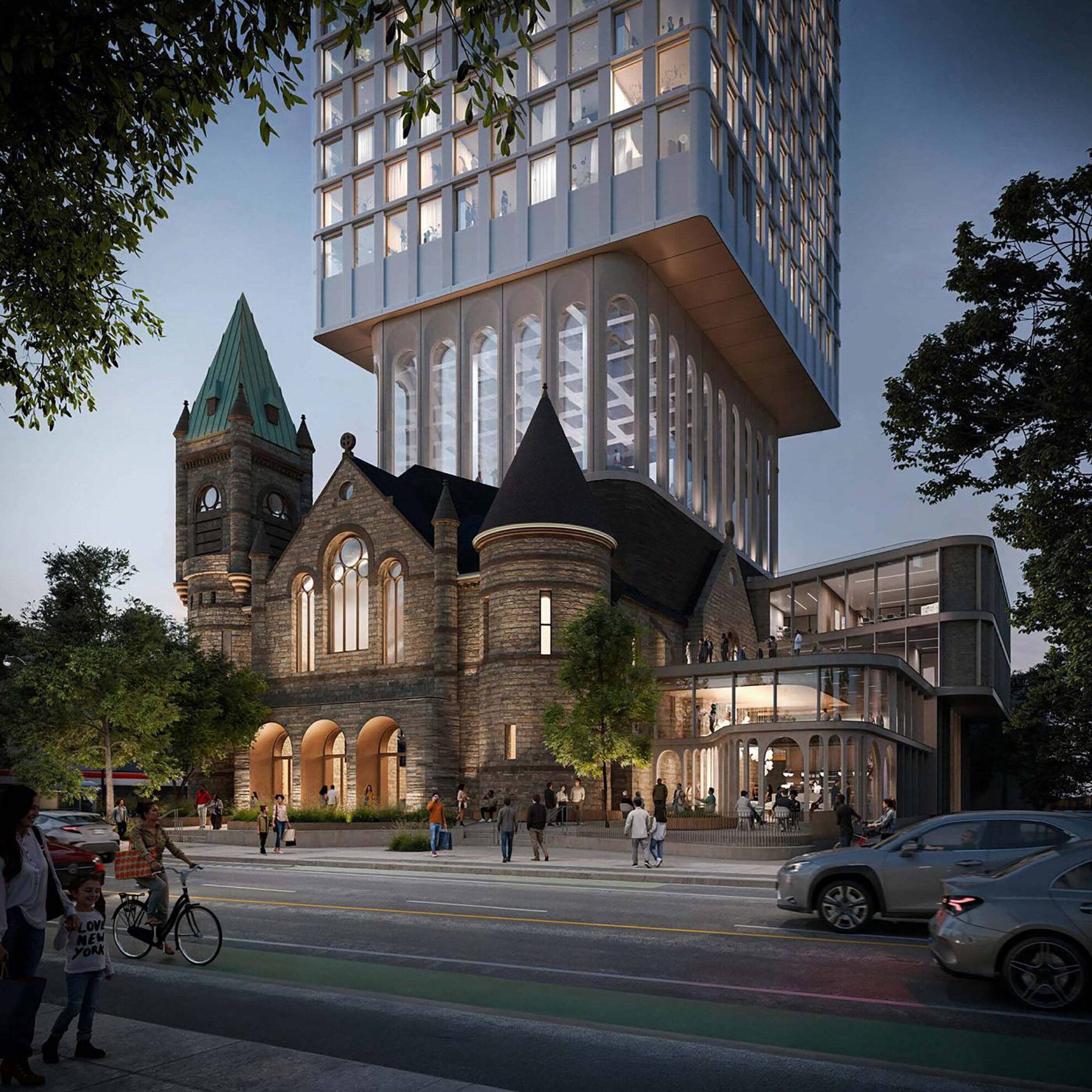
Land developer Kindred Works and the United Church of Canada won big on February 4 when City Council voted to allow a 48-plus-storey “point tower” in place of the 139-year-old St. Luke’s Church at Sherbourne and Carlton Streets. Here’s how City Council was led to reverse its policy of protecting the landmark church.
1. Mischaracterize what’s being proposed
The city’s land-use planners, who want tall and slender point towers on restricted sites downtown, advised councillors that the existing heritage-designated church would be retained. But architectural drawings submitted with the application clearly showed that all that would be left of the church would be some Credit Valley sandstone walls and the outermost parts of its picturesque roof line.
2. Ignore municipal obligations under the Ontario Heritage Act
When a municipal council designates a heritage conservation district like the Cabbagetown Northwest district where the church is located and adopts a plan for the area as it did, the Ontario Heritage Act states that the municipal council shall not pass a by-law for any purpose contrary to the objectives set out in the plan. The Cabbagetown Northwest plan contains explicit guidance on avoiding demolition of heritage buildings and destruction of historic fabric or distinguishing architectural features. The plan also contains guidelines for appropriate new buildings, for example, regarding height similar to that of adjacent properties and the immediate streetscape. The city’s land-use planners failed to share this with councillors.
The Ontario Heritage Act also requires a municipal council to consult its municipal heritage committee (the Toronto Preservation Board) before acting on an application to erect, demolish or remove a building or a building’s heritage attribute in a heritage conservation district. City staff scheduled the Toronto Preservation Board meeting after the Toronto and East York Community Council had already recommended approving the application, making the board’s decision to recommend refusal of the application inconsequential.
3. Dismiss inconvenient official plan policies
The city’s official plan has policies on heritage conservation, including: “Heritage Conservation Districts should be managed and conserved by approving only those alterations, additions, new development, demolitions, removals and public works in accordance with respective Heritage Conservation District plans.” Another policy says: “The retention of facades alone is discouraged [in new construction on heritage property].”
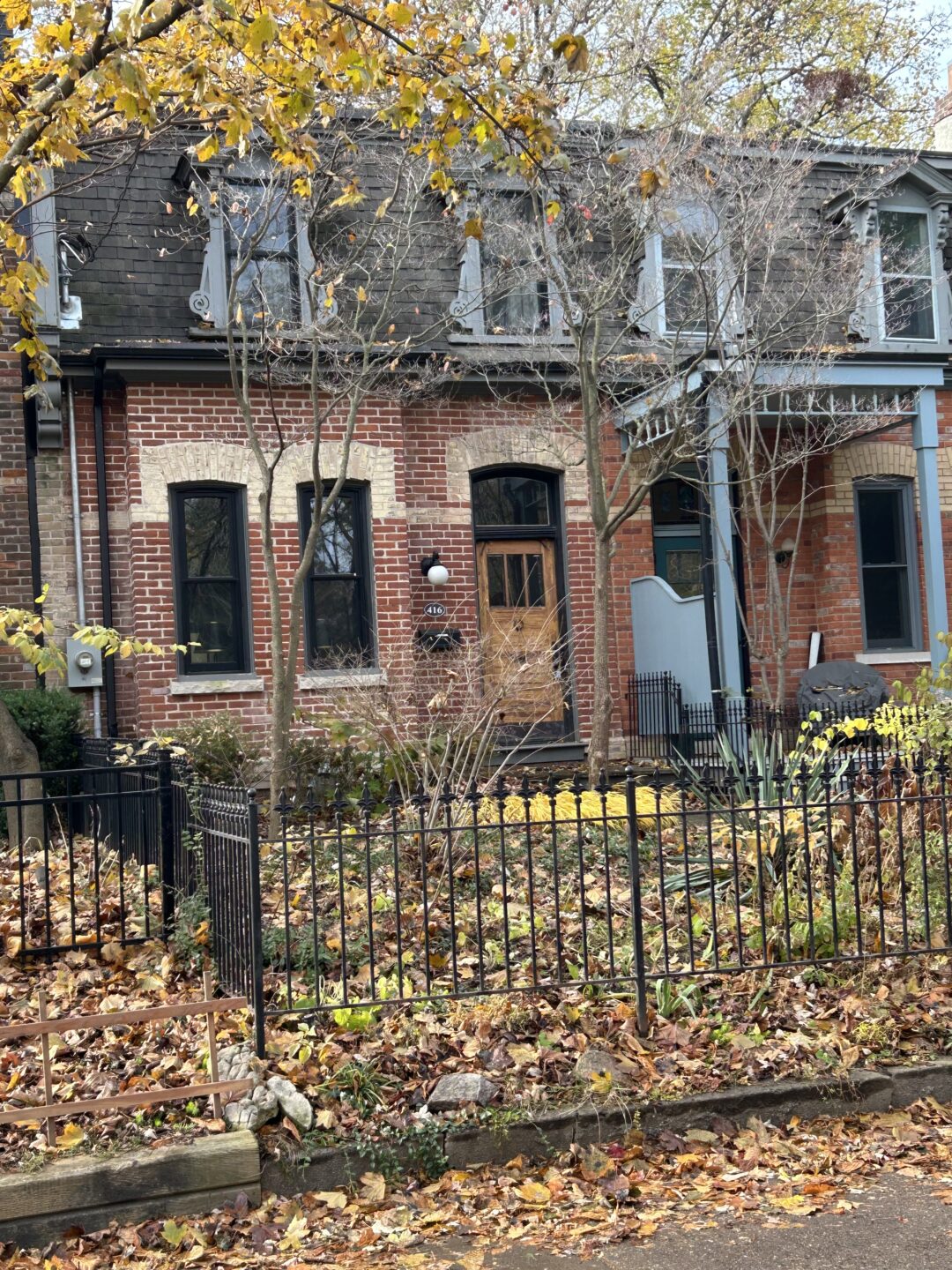
The plan’s policies on built form discuss limiting shadow impacts (such as the long shadow to be cast by the Kindred Works tower on Carlton Street, Winchester Square Park and the Cabbagetown neighbourhood) and providing transition in scale (between the high-rise tower and the two-and-a-half-storey Chamberlin Block to the east).
The heritage conservation policies were dismissed by a two-sentence statement in the report to councillors, as were the built-form policies by this clever override: “…when interpreting the built form policies as they relate to height and density, the planned context will prevail [over the existing context].”
4. Have the city’s heritage planners sing the same tune
The city’s heritage planners, whose job is to apply best practice to the conservation of heritage properties, were relegated to window dressing. As the heritage planner on the St. Luke’s file said at the Toronto Preservation Board meeting, “Typically heritage staff don’t get too involved in the review of high-tower elements mostly because they are not perceivable from the pedestrian level walking along the street.”
5. Dangle affordable housing as a benefit hard to refuse
After waiting three decades for the private sector to build affordable units while it was instead building condominiums, governments jumped on the housing bandwagon. In 2021, City Council entered into a memorandum of understanding with United Property Resource Corporation to enable the development of affordable rental housing units.
Acting on behalf of UPRC and relying on a $20 million line of credit from Canada Mortgage and Housing Corporation, Kindred Works, a private, for-profit company, in 2022 got City Council approval for alterations to the church and a 12-plus-storey addition built around and cantilevered over the church. In exchange for 31 affordable rental units out of a total of 100 in this project, the city waived development charges and planning and building permit fees, and exempted property taxes for 40 years – an estimated value of $2.8 million in foregone revenue.
Two years later, Kindred Works came back to ask for four times the height – a 48-storey tower. Of the 440 units, between 20 and 30 per cent would be affordable, according to the display board at the open house Kindred Works hosted on January 5.
On questioning from Councillor Paula Fletcher at the January 13 Community Council meeting, Kindred Works partner David Constable said Kindred Works had never built anything near the size of the revised proposal and that the company’s investors were the United Church and Kindred Works staff. In the magazine Broadview (March/ April 2026), Mike Milne reported: “…there is no way to know how much profit is coming from [Kindred Works’] projects, how much is being used for Kindred Works’ fees or how much is earned among employees who are minority shareholders.”
For a promise of 132 units at an undetermined affordable rate and with the same $2.8 million incentives for the secured 31 units as in the 2022 agreement, Kindred Works did well.
Paul Dilse is a retired heritage planner who has lived in the Cabbagetown neighbourhood for more than four decades.