
Rodrigo Huerta Aguirre
After the final whistle in Toronto as a host city for the 2026 FIFA World Cup, restaurant and bar managers are contemplating the bill left by the soccer frenzy on their side of the pitch.
“The beginning was a bit of a mismatch,” Huey Nguyen, manager at Yonge Street’s Hoops Sports Bar & Grill, told the bridge. “It was busy for sure, but not as much as I expected.”
From June 11 to July 19, Toronto hosted six of the tournament’s 104 matches and welcomed approximately 600,000 visitors into the city’s stadium and official fan festival – at a cost of $380 million with just under $180 million of the total coming from municipal funds, according to a city budget report.
City councillors requested last month that staff provide a fuller picture of the World Cup’s impact, but businesses in the Downtown East had already done their math.
“It was a logistical nightmare,” Lisa Katagawa, co-owner of The Jason George’s (100 Front Street East), told the bridge. “We were busy with FIFA, and then we weren’t. But in the end, it all balanced out that we were ahead. It turned out to be really profitable.”
Though the earlier matches provided a slow start, staff additions for later games did pay off, Katagawa said. “When it started ramping up – I’d never seen the city get so involved in [football] – it was more predictable. So with the playoff games getting closer, we could put all the staff on and be ready for them.”
For other businesses, the World Cup effect kicked in immediately.
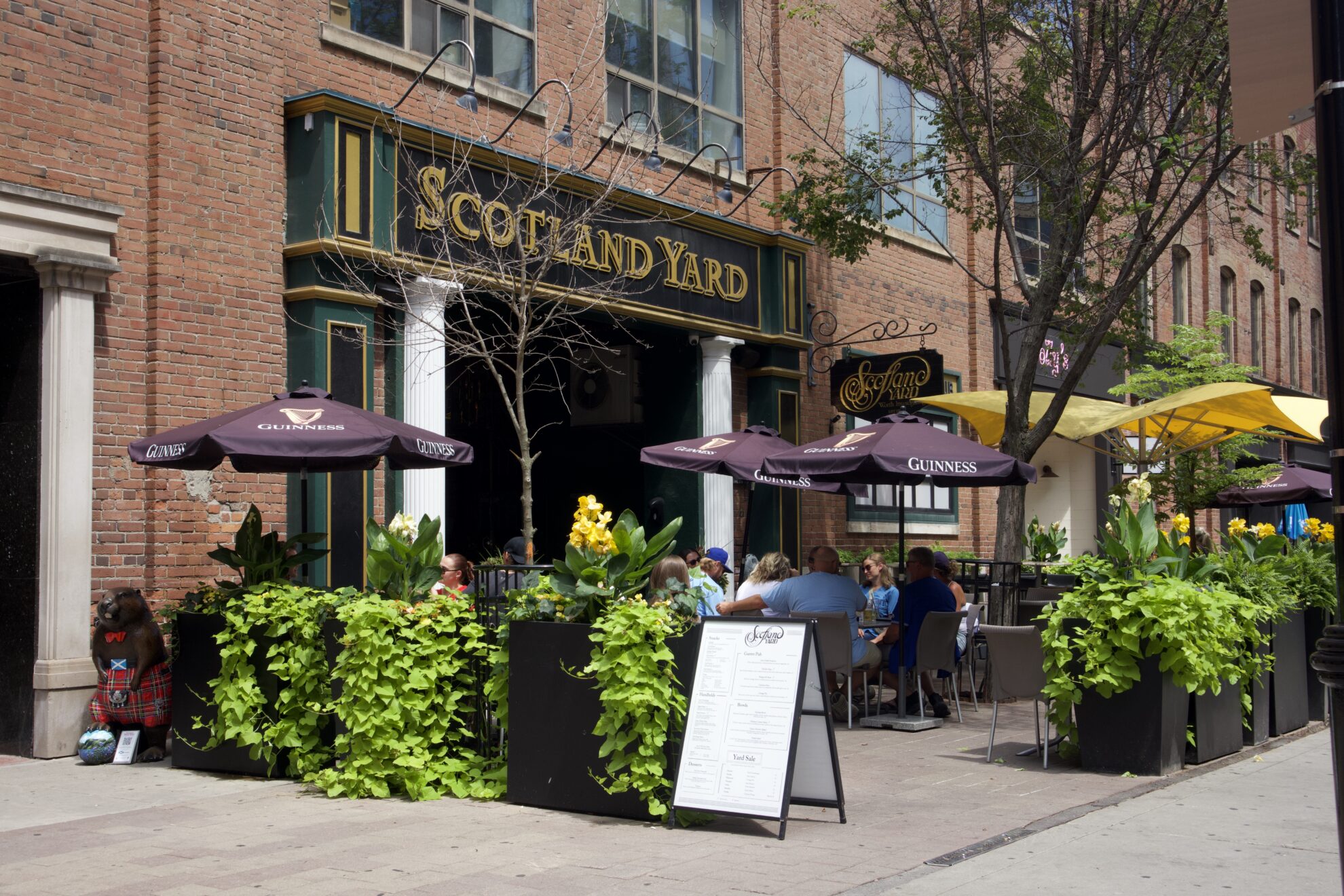
“What was a little bit unexpected was that we were full for a lot of the games,” James Cudworth, bar manager at Scotland Yard (56 The Esplanade), told the bridge. While the Isles-themed pub is used to higher foot traffic during England’s Premier League matches, Cudworth said this time he served crowds other than their Brit regulars.
“I guess it’s because of how diverse Toronto is,” he added.
But for most managers, the on-and-off game schedule wasn’t ideal. George Milbrandt, founder of C’est What? (67 Front Street East) told the bridge that irregular traffic largely offset profits during game days, even at their store on pedestrian-busy Market Street.
“People spend quite a lot of money during the game,” Nguyen said, echoing a similar situation at Hoops. But “as soon as the game is over, [business] will go the other way. The day after, when there are no games, people just don’t go out.”
“If the World Cup happened all the time, we wouldn’t have to worry about finances,” Nguyen added.
Even with “dip-offs,” among out-of-visitors, international consumers drove 37 per cent of spending in the city, according to Destination Toronto, followed by Ontarians’ 27 per cent, the rest of Canada at 21 per cent, and U.S. visitors at 15 per cent. The organization told the bridge the data is still preliminary.
Extra time
A month before the first match in Toronto, the province announced that licensed bars and restaurants could make last calls for alcohol until 4 a.m. during the tournament.
Cudworth believes 2 a.m. is still a decent time to get a final pint at Scotland Yard. “I think if people want to drink, they’ll find one way or another,” he said.
At a July 14 Economic and Community Development Committee meeting, Ward 24 Councillor Paul Ainslie (Scarborough-Guildwood) brought forward a motion to study Montreal’s nightlife hub model, which allows certain venues to extend business hours to as late – or early – as 6 a.m.
Katagawa said that model wouldn’t be profitable for The Jason George. “It’s tough serving people at 4 in the morning,” she said.
Milbrandt recognized customer demand and doesn’t oppose the motion to consider late hours but doesn’t see much value in it for C’est What. “Interest from our customer base in late hours has been waning for the past decade.”
“I don’t see that bringing any benefit,” Nguyen added. “By 11, 12 o’clock, the place is empty.”