
Anthony Marcusa –
City Council will look at the effectiveness of using paid duty police officers (PDOs) for traffic enforcement and control following a report that saw the cost reach $5.8 million in 2025.
The issue was raised at an Audit Committee hearing on February 12, as councillors questioned who makes deployment decisions, and whether hiring police is an appropriate use of money. This cost is in addition to the $1.43 billion police budget that council approved.
Paid officers are requested by a city department such as the TTC or engineering and construction services when enforcement authority is needed to keep traffic moving and cars, pedestrians, and cyclists safe. Where and when the officers are deployed is up to the requesting department.
“We basically prescribe it where we feel there’s a need,” Roger Browne, congestion and network management director at Transportation Services, told the Audit Committee. Referring to construction projects occupying street space, he said, “Every case is sort of case specific and we would look to try and determine what’s the best way to kind of manage the construction work zone looking at their plan.”
“In the chain of command, the work zone coordination team works with [the department] in collaboration with police to establish what the purpose would be for the paid duty officers,” he added.
Toronto Police did not attend the audit meeting despite a request from Browne, but did respond to the bridge.
“Officers working paid duties are already on their days off and are choosing to do a paid duty on their own time. It’s not taking away from on-duty resources,” a spokesperson told the bridge. “They are requested and paid for by the contractor, agency, or city division responsible for the work, and are typically required as part of the project’s traffic control and safety plan.”
“Questions about whether paid duty assignments are a good use of public funds should be directed to them.”
Contractors to the city do not fund PDOs directly. If the city requests on-site officers to handle safety and traffic, the contractor then increases its price to accommodate that request – and may add a service or administrative fee.
Requests for paid duty officers can be made through the police website. Officers are hired at a minimum rate of $94.50 per hour for at least three hours. Additional equipment or assistance, such as bicycles or horses, raises the hourly rate.
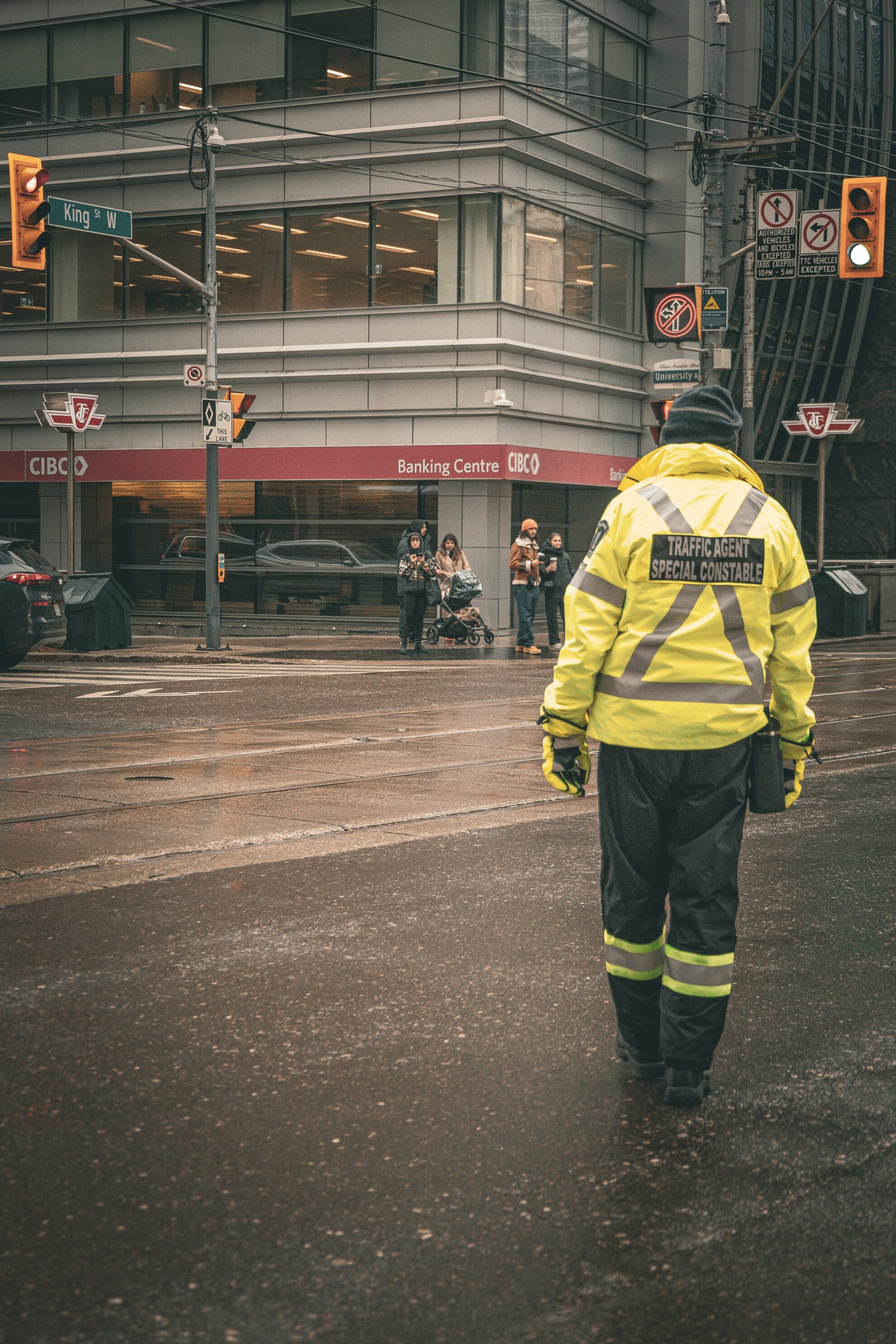
Councillors discussed hiring PDOs versus using city traffic agents. The city has about 127 traffic agents to keep traffic moving; they’re a cheaper alternative to police but have less authority.
Deciding which to use can be a collaboration among “the construction work zone coordinator, the project manager for [the city department], and oftentimes the Toronto Police,” Browne said. Police are preferred when there are physical changes to the road, including lane closures and turning restrictions.
“It is definitely better to have an actual paid duty officer who has the ability to provide enforcement support,” Browne said.” Mostly we’re just trying to maintain safety and security around the construction work zone sites given the significant change in the right of way.”
Officers have discretion in wielding their enforcement authority. Etobicoke Centre Councillor Stephen Holyday questioned if and when any tickets are actually issued, and whether police should be preferred over traffic agents.
“What I’m hearing is that that officer is brought in not to physically order cars to move around because you’ve got signs for that, but to ensure that people are obeying,” he said.
The annual cost to the city of using police “is not a small figure. It’s $5.8 million,” Holyday said. “What is the purpose that they’re being prescribed for and are we having an appropriate response through the service delivered in that?”
York South-Weston Councillor Frances Nunziata cited anecdotal evidence.
“When I see construction going on and you see a paid duty officer, they’re not doinganything. They’re just standing there,” she said. “Maybe there are some PDOs at major intersections moving the traffic along, but others you just see them and they have their back against you and we don’t know what they’re doing.”
City Council will consider this issue at its March 25, 26 and 27 meetings.
“It’s wise for us to take a little bit of a deeper look into this because it’s a really important system and it’s a significant amount for the city,” Holyday said. “I think the questions have only started on this.”